It’s 6:47 p.m. You’re staring at a half-finished report, three unread Slack threads, and an inbox that somehow grew during the day. You worked hard — maybe even harder than anyone on your team — but you can’t shake the feeling that you’re falling behind. Sound familiar?
You’re not alone. According to a Gallup survey, nearly 75% of employees report feeling burned out at work at least sometimes, and poor time management is one of the leading culprits. The professionals who get promoted, land dream clients, or launch successful side projects aren’t necessarily working longer hours — they’re working smarter. They’ve mastered a specific set of time management skills that allow them to focus on what truly moves the needle.
In this guide, you’ll learn 12 practical, research-backed time management skills that will transform your career: prioritization, time blocking, task batching, the Pomodoro technique, goal setting, time tracking, saying no, delegation, calendar management, reducing distractions, habit formation, and weekly reviews. Each one comes with clear steps you can implement today — and real examples of how they’ve helped professionals like you level up.
Why Time Management Matters for Your Career
Time management isn’t just about checking off to-do lists. It’s about intentionality — making sure your hours align with your biggest goals. When you manage time well, you produce higher-quality work, build trust with managers and clients, and create space for strategic thinking that leads to career advancement.
Poor time management, on the other hand, keeps you stuck in reactive mode: constantly putting out fires, missing deadlines, and feeling overwhelmed. Research from the American Psychological Association shows that employees who practice structured productivity tips and planning report 25% less stress and significantly higher job satisfaction.
The good news? Time management is a learnable skill set. Let’s dive into the 12 skills that will help you reclaim your time, reduce burnout, and accelerate your growth.
1. Prioritization (Eisenhower Matrix)
Prioritization is the ability to distinguish between what’s urgent and what’s truly important — and act accordingly.
This skill matters because busywork can feel productive while quietly derailing your biggest goals. The Eisenhower Matrix divides tasks into four quadrants: urgent + important (do now), important + not urgent (schedule), urgent + not important (delegate), and neither (eliminate). Mastering prioritization techniques like this helps you shift from firefighting to strategy — exactly the kind of work that gets noticed by leadership.
How to implement:
- List all your tasks for the week.
- Categorize each using the Eisenhower Matrix.
- Schedule time for Quadrant 2 (important, not urgent) work — that’s where career growth lives.
Example: A marketing manager stopped responding to every Slack message immediately and started blocking 90 minutes each morning for campaign strategy. Within a quarter, she was leading the company’s biggest product launch.
2. Time Blocking
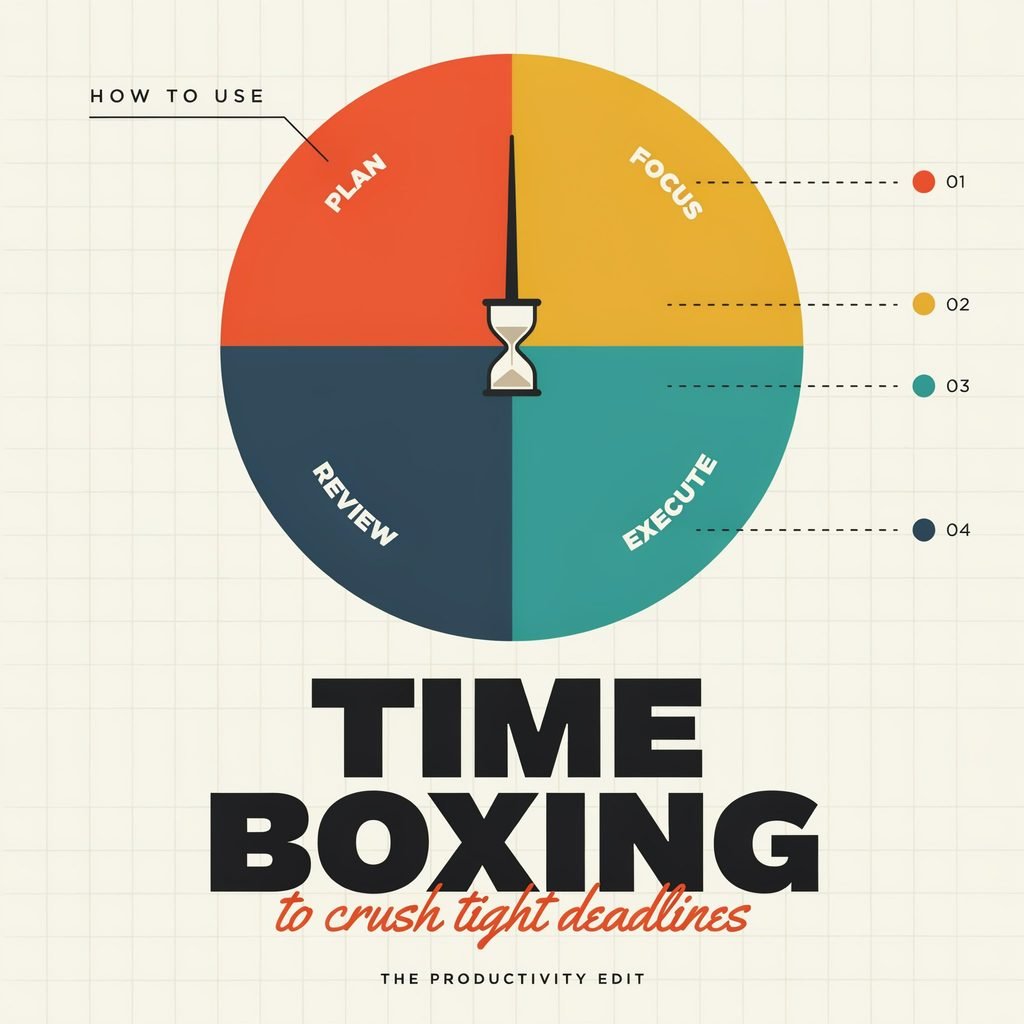
Time blocking means assigning specific chunks of your calendar to focused work — instead of reacting to whatever comes next.
When you plan your day in blocks, you protect your most valuable hours from interruptions. This is one of the most powerful focus strategies because it turns your calendar into a productivity blueprint rather than a meeting graveyard.
How to implement:
- Identify your peak focus hours (usually morning for most people).
- Block 90-minute “deep work” sessions for your most important projects.
- Treat those blocks like client meetings — non-negotiable.
Example: A freelance designer started blocking 9 a.m.–11 a.m. for client concepts only. Her project turnaround time dropped from five days to two — and her client satisfaction scores soared.
3. Task Batching
Task batching is grouping similar tasks together to minimize context switching.
Every time you switch from writing to email to analytics, your brain pays a “switching cost” — research shows it can take up to 23 minutes to regain full focus. Batching similar tasks keeps your brain in one mode, making it one of the most underrated productivity tips for knowledge workers.
How to implement:
- Group recurring tasks: emails, invoicing, social posts, reporting.
- Assign specific time slots (e.g., email at 11 a.m. and 4 p.m. only).
- Use tools like Notion or spreadsheets to batch-create content or reports.
Example: A content creator batched all video editing into Tuesdays and Thursdays. She reclaimed 6+ hours per week and published twice as many videos.
4. Pomodoro Technique (Focused Intervals)
The Pomodoro technique uses short, timed work sprints — typically 25 minutes of focus followed by a 5-minute break — to maintain high concentration without burnout.
This method works because it leverages your brain’s natural attention span. It’s especially effective for tasks that feel overwhelming, like writing, coding, or data analysis.
How to implement:
- Pick one task. Set a timer for 25 minutes.
- Work without interruption until the timer rings.
- Take a 5-minute break; after four cycles, take a 15–30 minute break.
Example: A junior developer used Pomodoro sprints to debug code. He cleared a week-long backlog in two focused afternoons — and earned praise from his tech lead.
5. Goal Setting and Reverse Planning
Goal setting paired with reverse planning means defining a clear outcome and working backward to create actionable steps.
Vague goals like “get better at my job” don’t lead to career advancement. SMART goals (Specific, Measurable, Achievable, Relevant, Time-bound) combined with schedule planning turn ambition into execution.
How to implement:
- Set a quarterly career goal (e.g., earn a certification).
- Break it into monthly milestones and weekly tasks.
- Schedule those tasks into your calendar like any other commitment.
Example: A project manager mapped out 12 weeks of study sessions for her PMP certification. She passed on the first try — and was promoted within six months.
6. Time Tracking and Data-Driven Adjustments
Time tracking is the practice of logging how you actually spend your hours — not how you think you spend them.
You can’t improve what you don’t measure. Tracking reveals where time leaks happen: endless meetings, social media spirals, or low-value admin. It’s the foundation of every other time management skill on this list.
How to implement:
- Use a tool like Toggl or Clockify for 1–2 weeks.
- Categorize time into buckets: deep work, meetings, admin, breaks.
- Identify and eliminate or reduce low-value categories.
Example: A consultant discovered he spent 11 hours per week in status meetings. He proposed async updates instead — and reclaimed nearly a full workday.
7. Saying No and Setting Boundaries
Saying no means selectively declining requests that don’t align with your priorities — politely but firmly.
Every “yes” to a low-impact task is a “no” to your most important work. Professionals who set boundaries earn more respect, not less, because they’re known for delivering quality on what matters.
How to implement:
- Create a polite “no” template: “I appreciate you thinking of me, but I’m focused on [priority] right now.”
- Set clear office hours or “focus hours” where you’re unreachable.
- Decline meetings without a clear agenda or decision-making purpose.
Example: A graphic designer started declining last-minute “quick favor” requests. Her on-time delivery rate hit 100%, and her manager nominated her for a leadership program.
8. Effective Delegation
Delegation is assigning tasks to others — teammates, freelancers, or tools — so you can focus on high-value work.
Many professionals stall in their careers because they try to do everything themselves. Learning delegation skills signals leadership potential and multiplies your impact.
How to implement:
- Audit your tasks: which ones could someone else do 80% as well?
- Document clear instructions and expected outcomes.
- Provide feedback and iterate — delegation is a skill for both parties.
Example: A startup founder outsourced inbox management and scheduling to a virtual assistant. She used the freed-up time to close three new enterprise clients.
9. Calendar Management and Meeting Hygiene
Calendar management means actively designing your schedule — not letting others design it for you.
Meetings are the silent killers of deep work. Practicing good “meeting hygiene” — shorter durations, clear agendas, and async alternatives — is one of the highest-leverage productivity tips for modern professionals.
How to implement:
- Default to 25- or 50-minute meetings (not 30 or 60) to build in transition time.
- Require an agenda and desired outcome for every meeting you accept.
- Propose async alternatives: Loom videos, shared docs, or Slack threads.
Example: A product manager reduced her weekly meeting time from 18 hours to 11 by enforcing agendas and async standups — and shipped two features ahead of schedule.
10. Reducing Distractions and Creating Focus Rituals
Reducing distractions means proactively designing your environment and habits to protect attention.
Your phone, email, and open office are engineered to steal focus. Building focus strategies and pre-work rituals trains your brain to enter deep work mode on command.
How to implement:
- Turn off non-essential notifications; use Do Not Disturb during focus blocks.
- Use website blockers like Freedom or StayFocusd during deep work.
- Create a startup ritual: coffee, playlist, 5-minute plan — then dive in.
Example: A copywriter started each morning with the same lo-fi playlist and a 5-minute outline. Her first-hour word count tripled within two weeks.
11. Habit Formation and Consistency
Habit formation is building small, repeatable routines that compound into massive results over time.
One great day doesn’t change your career — 100 consistent days do. Using habit formation techniques like habit stacking (attaching a new habit to an existing one) makes time management skills stick long-term.
How to implement:
- Choose one keystone habit (e.g., planning tomorrow’s top 3 tasks tonight).
- Stack it onto an existing routine (e.g., right after brushing your teeth).
- Track your streak — and don’t break it for 30 days.
Example: A sales rep spent 15 minutes every evening planning the next day’s outreach. His pipeline grew 40% in one quarter — without working longer hours.
12. Review and Continuous Improvement (Weekly Review)
A weekly review is a dedicated time to reflect on the past week, celebrate wins, and plan the next one.
Without review, you repeat the same mistakes and miss patterns. This is the meta-skill that keeps all other time management skills sharp and aligned with your career advancement goals.
How to implement:
- Block 30–45 minutes every Friday afternoon or Sunday evening.
- Review: What went well? What didn’t? What’s on deck?
- Set your top 3 priorities for the coming week and schedule them.
Example: A freelance writer used weekly reviews to spot that she was overcommitting to low-pay clients. She pruned her roster, raised her rates, and increased her income by 25%.
Quick Tools and Templates to Get Started
The right tools make these time management skills effortless to implement. Here’s a quick stack:
- Calendar & schedule planning: Google Calendar or Outlook — use color-coded blocks for deep work, meetings, and breaks.
- Task management: Todoist, Trello, Asana, or Notion — pick one and stick with it.
- Time tracking: Toggl Track or Clockify — free tiers are more than enough to start.
- Focus apps: Forest (gamified focus), Focus@Will (science-backed music), or Endel.
- Distraction blockers: Freedom, StayFocusd, or Cold Turkey.
Simple Weekly Review Template:
✅ What were my 3 biggest wins this week?
✅ What tasks or habits fell through — and why?
✅ What are my top 3 priorities for next week?
✅ What meetings or commitments can I cancel or delegate?
Sample One-Day Time Block:
- 8:00–8:30 — Morning ritual + plan
- 8:30–10:30 — Deep work block #1
- 10:30–11:00 — Email & Slack batch
- 11:00–12:00 — Meetings or collaboration
- 12:00–1:00 — Lunch + walk
- 1:00–3:00 — Deep work block #2
- 3:00–3:30 — Admin batch
- 3:30–5:00 — Wrap-up + next-day plan
Common Pitfalls and How to Avoid Them
Even with the best productivity tips, a few traps can derail your progress:
Perfectionism: Waiting for the “perfect” system means never starting. Pick one skill, implement it imperfectly, and iterate.
Over-scheduling: Back-to-back time blocks leave no room for creativity or surprises. Always build in 15–30 minute buffers.
Neglecting breaks: Your brain needs downtime to consolidate learning and maintain focus. Schedule breaks like you schedule meetings.
Inconsistent application: Using a system for three days won’t change your career. Commit to at least 30 days before judging results.
Fix: Start small. Choose one skill from this list. Track it for two weeks. Then add another. Momentum — not perfection — is what transforms careers.
Final Thoughts: Your Time Is Your Career
Time management isn’t about squeezing more work into every hour. It’s about making sure the right work gets your best hours. The 12 time management skills in this article aren’t just productivity hacks — they’re career accelerators.
Start with one. Master it. Then build the next. In six months, you won’t just be more productive — you’ll be more strategic, more visible, and more in control of your professional destiny.
Your future self will thank you. Start today.