We’ve all stared at a perfectly color-coded calendar, wondering why we still feel completely behind. The truth is that traditional time management often fails because it ignores human biology. Time is a fixed metric, but your mental energy and attention are highly variable resources.
True productivity isn’t about squeezing more hours into your day; it’s about understanding the time management science that dictates how your mind works. When we explore the intersection of productivity and brain function, we realize that optimizing our schedule requires optimizing our biology.
This guide will explore how cognitive science shapes effective habits and daily routines. We will cover how to master your attention, align tasks with your biological clock, and build automated habits. By the end, you will have a research-backed blueprint to reclaim your focus and get more done in less time.
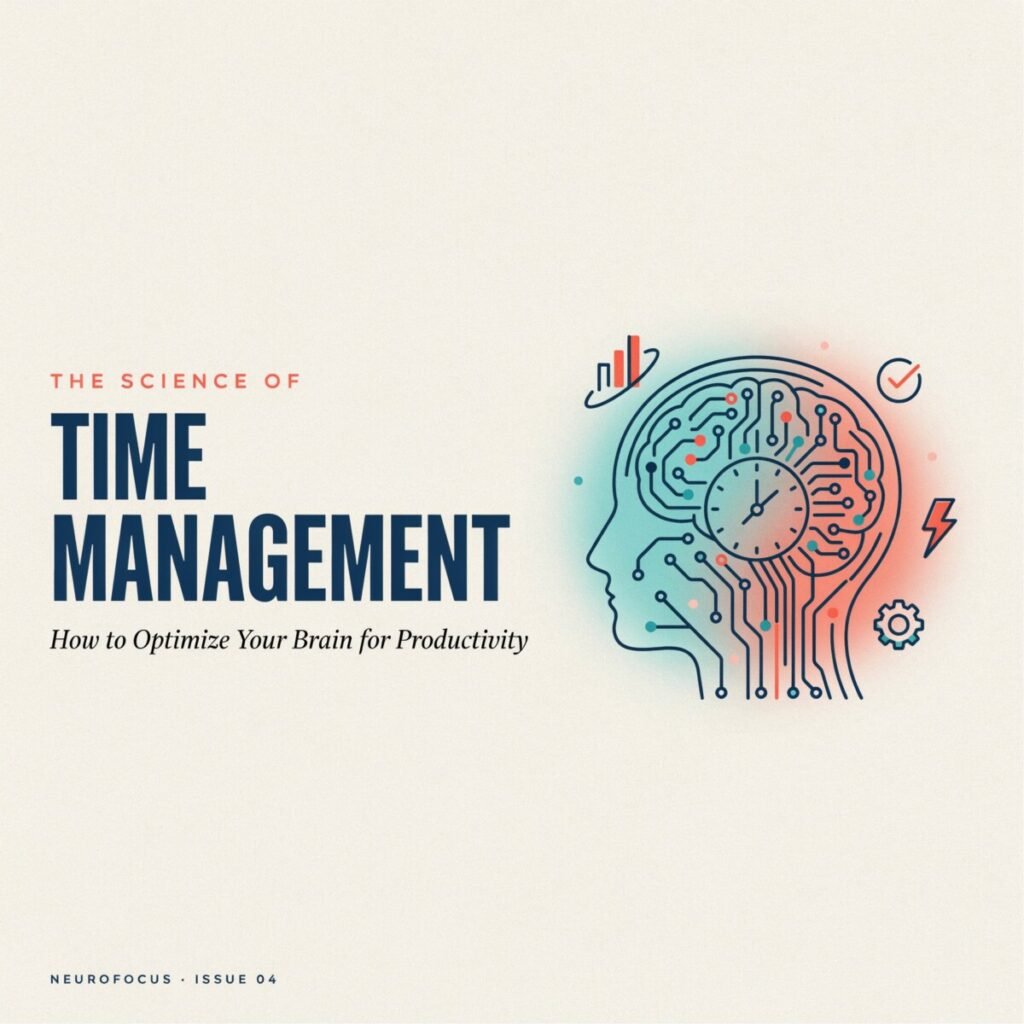
How the Brain Handles Attention and Time
To manage your time effectively, you first need to master attention management. The human brain operates using two primary attention systems: focused and diffuse. Focused attention is what you use for deep, analytical work, while diffuse attention allows your mind to wander and connect disparate ideas.
However, your brain’s working memory is strictly limited, much like the RAM in a computer. When you take on too many tasks at once, you exceed your cognitive load, leading to mental bottlenecks and errors. This mental overload accelerates decision fatigue, a state where your brain’s ability to make high-quality choices deteriorates after a long session of decision-making.
This biological reality is why multitasking is a myth. Every time you shift your focus from writing an email to checking a Slack message, you incur a context switching cost. Research by Dr. Gloria Mark at the University of California, Irvine, reveals that it takes an average of 23 minutes and 15 seconds to fully regain deep focus after an interruption.
Furthermore, the American Psychological Association notes that shifting between tasks can reduce overall productivity by up to 40 percent. This massive drop in efficiency happens because your brain leaves “attention residue” on the previous task, a concept popularized by Cal Newport in his book Deep Work. Ultimately, protecting your attention is the most critical step in learning how to optimize brain for productivity.
Aligning Work with Your Biological Clock
Your brain does not maintain a steady level of alertness throughout the day; it fluctuates based on your internal biological clock. Understanding circadian rhythm productivity means scheduling your most demanding tasks when your body temperature and cortisol levels naturally peak. For most people, this analytical peak occurs in the late morning, followed by a natural dip in the early afternoon.
Beyond the 24-hour circadian cycle, your brain also operates on an ultradian rhythm focus cycle. An ultradian rhythm is a natural biological cycle lasting 90 to 120 minutes, during which your brain can sustain high-frequency focus before requiring a 20-minute rest. Pushing past this 120-minute limit without a break leads to diminishing returns and mental exhaustion.
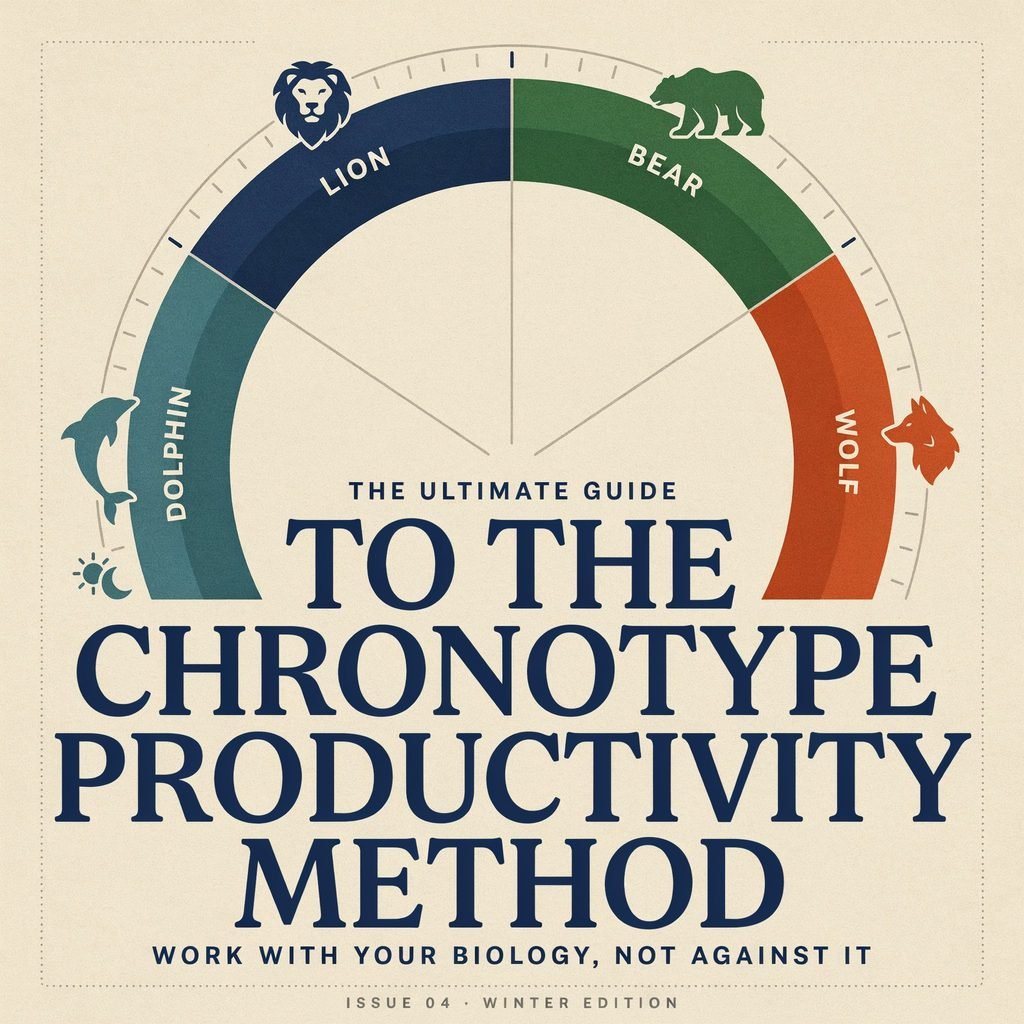
To leverage these cycles, you must practice chronotype scheduling. Early birds (larks) should tackle complex problem-solving at 8:00 AM, while night owls might find their peak analytical window opens at 8:00 PM. If you work across multiple time zones, anchor your peak hours and communicate these boundaries to your team to protect your focus.
True energy management for work also requires treating your body like a high-performance machine. High-quality sleep, proper hydration, and nutrient-dense foods are not just lifestyle perks; they are essential cognitive enhancers that directly impact your prefrontal cortex. Additionally, taking short movement breaks between ultradian cycles increases blood flow to the brain, cementing the neuroscience of productivity in your daily routine.
Turn Tasks into Habits and Automation
Willpower is a finite resource, which is why relying on motivation to complete repetitive tasks is a flawed strategy. The neuroscience of productivity shows that habits are stored in the basal ganglia, an area of the brain that operates automatically and requires very little cognitive energy. By mastering habit formation for productivity, you can bypass the prefrontal cortex and reduce decision fatigue.
Habits are formed through a simple neurological loop: a cue, a routine, and a reward. To build better work habits, you can use “chunking” to break complex projects into small, procedural steps. You can also use “habit stacking” by attaching a new, desired behavior to an existing, established routine.
For content creators and digital marketers, task automation is the ultimate extension of habit formation. You can convert repetitive tasks into automated routines by using software to handle social media posting, email filtering, and data entry. Creating standardized templates for blog outlines or client proposals also removes the friction of starting from a blank page.
Printable Micro-Habit 1: The Morning Focus Ritual
Spend the first 15 minutes of your workday completely offline. Use this time to review your top three priorities, drink a glass of water, and visualize your first deep-work block before opening your email inbox.
Reduce Cognitive Load: Techniques That Work
Your brain is designed for generating ideas, not for storing them. Externalizing your memory by using to-do lists, project management apps, and digital notes instantly frees up working memory. This reduction in mental clutter allows you to deploy deep work strategies without the nagging anxiety of forgetting a minor detail.
One of the most effective ways to lower cognitive strain is through work batching techniques. Instead of writing one blog post, editing another, and researching a third all in one morning, batch similar tasks together. A digital marketer might dedicate a single two-hour block to writing ten social media headlines, drastically reducing the mental friction of switching between creative and analytical mindsets.
If you don’t have long uninterrupted time, break your deep work into micro-sprints. Even twenty minutes of single-tasking is vastly superior to fragmented multitasking, proving that you don’t need a perfectly clear schedule to be effective. If you struggle to start tasks, the friction is usually cognitive, not physical, so lower the barrier by defining the very first physical action required.
Printable Micro-Habit 2: The Pre-Task 60-Second Plan
Before starting any major task, take exactly 60 seconds to write down the specific outcome you want to achieve and the very first physical step you will take. This tiny ritual bridges the gap between intention and action, eliminating the dread of starting.
Tools and Methods Grounded in Neuroscience
While biology provides the foundation for focus, the right frameworks and tools provide the scaffolding. The Pomodoro technique—working for 25 minutes followed by a 5-minute break—is highly effective for tasks you dread, as it lowers the psychological barrier to entry. It forces you to single-task while providing frequent dopamine hits from completing short intervals.
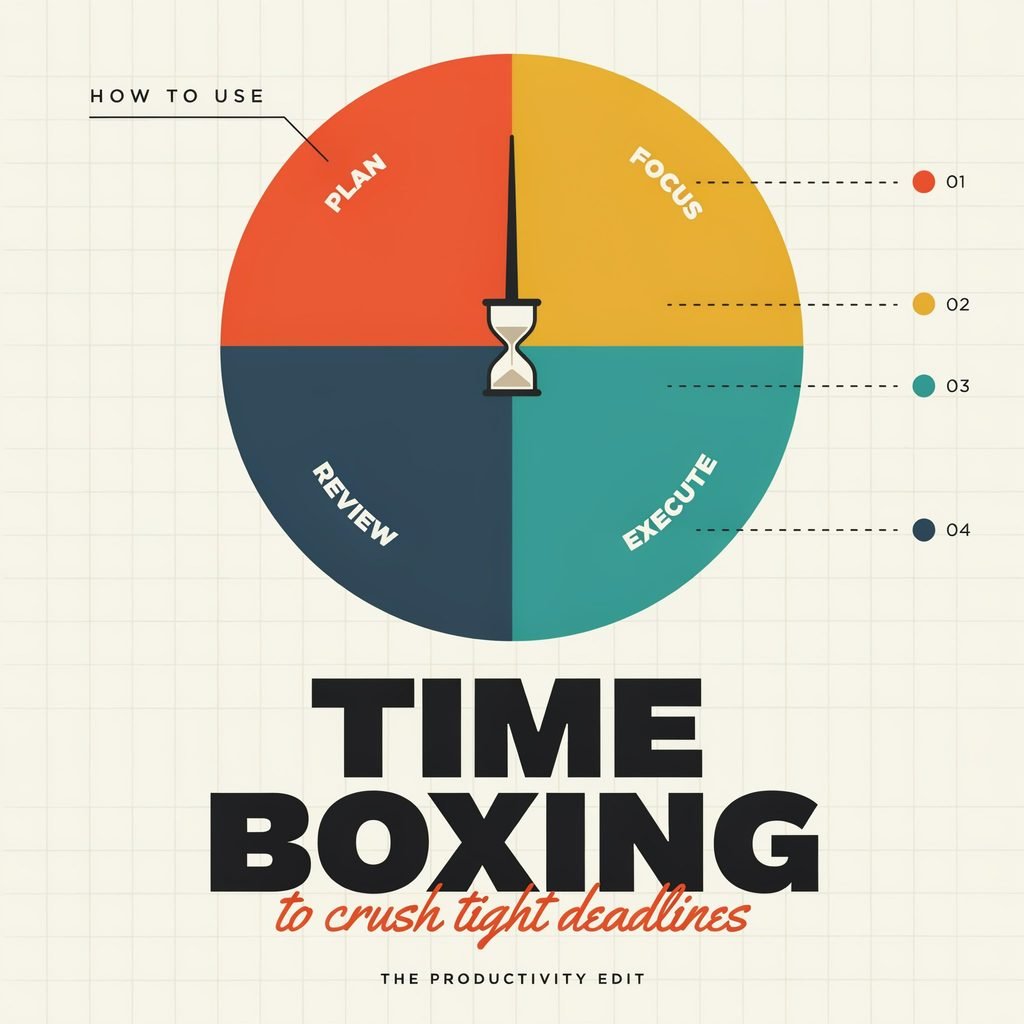
For larger, more complex projects, time blocking benefits become incredibly apparent. Time blocking involves assigning a specific, dedicated window of time on your calendar for a single task or category of work. This method transforms your abstract to-do list into a concrete schedule, forcing you to be realistic about how long tasks actually take.
To prioritize these blocks, you can use the Eisenhower Matrix to separate urgent tasks from truly important ones. For comprehensive organization, GTD and productivity systems (Getting Things Done) help you capture every open loop in your life and process them into actionable steps. These systems ensure that no task slips through the cracks while keeping your mind clear for execution.
Finally, protect your digital environment using focus apps and blockers. Tools like Freedom or Cold Turkey temporarily block distracting websites and apps during your deep work blocks. By engineering your environment to remove temptations, you rely less on willpower and more on systematic design.
Case Vignette: Sarah the Content Marketer
Sarah, a freelance content marketer, was constantly missing deadlines due to fragmented attention and endless client emails. She implemented time blocking for her writing sprints and used site blockers to eliminate social media distractions during her morning ultradian peaks. Within three weeks, her weekly article output increased by 30 percent, and her clients noted a significant drop in the number of revisions required.
7-Day Experiment: Optimize Your Brain for Productivity
True time management science isn’t about adopting every strategy at once; it’s about systematic experimentation. By tracking your energy and testing new frameworks, you can build a personalized system that works for your unique brain. Use the quick action plan below to test these concepts over the next week.
Printable Micro-Habit 3: End-of-Day Inbox Triage
Spend the last 10 minutes of your workday processing your inbox and organizing your digital workspace. Close all unnecessary browser tabs, write down your top three tasks for tomorrow, and physically shut down your computer to signal to your brain that the workday is over.
Quick Action Plan (7-Day Experiment)
- Day 0: Track your baseline. Log when you feel most alert, estimate your daily deep-focus minutes, and note your most frequent interruptions.
- Day 1–2: Schedule peak focus blocks. Set two 90-minute focus blocks during your peak energy windows (or 50-minute Pomodoros if preferred) and disable all notifications.
- Day 3: Batch your tasks. Group similar tasks (research, writing, editing) into dedicated blocks and use templates for repetitive workflows.
- Day 4: Externalize your memory. Do a “brain dump” of every open loop and project into a single digital inbox, then organize them into actionable next steps.
- Day 5: Automate and block. Set up one new automation (like an email filter or social scheduler) and use a site blocker during your morning deep work session.
- Day 6: Optimize your biology. Prioritize 8 hours of sleep, drink a glass of water before every work block, and take a 10-minute walking break between ultradian cycles.
- Day 7: Review and adapt. Look at your output and energy levels from the week, keep the tactics that worked, and discard the ones that felt forced.