Your alarm goes off at 6:15 a.m. Before your feet hit the floor, your brain’s already running through the list: emails to answer, a 9:30 Zoom call, kids to drop off, a gym session you keep postponing, that freelance project due Friday, and the gutters that need cleaning before the weekend rain hits. Sound familiar?
If you’re like most Americans juggling a career, family, side projects, and a dozen half-formed goals, your to-do list doesn’t motivate you—it paralyzes you.
Here’s a question worth sitting with: What if you ran your personal life the way high-performing tech teams run their projects? Not with more hustle culture. Not with another rigid planner. But with a flexible, iterative system designed to deliver progress in small, manageable chunks.
That’s the core idea behind Agile—a set of frameworks originally built for software development that emphasize short cycles, regular check-ins, visual progress tracking, and continuous adjustment. No computer science degree required.
By the end of this article, you’ll know exactly how Agile frameworks can improve your personal life—reducing overwhelm, sharpening your focus, and helping you finally move the needle on the goals that matter most to you.
What Are Agile Frameworks? A Non-Technical Overview
Agile was born in 2001 when a group of software developers got tired of waterfall project management—those massive, rigid, months-long plans that fell apart the moment reality changed. They wanted something faster, more adaptive, and more human. The result was a family of frameworks like Scrum and Kanban, built around short work cycles, frequent feedback, and delivering value incrementally.
Now, strip away the tech jargon and translate those ideas into everyday language:
- Your “product” is your life outcomes—your health, career growth, relationships, finances, personal projects.
- Your “backlog” is the master list of everything you want or need to do, parked in one place so it stops rattling around your head.
- A “sprint” is a short, focused time window (usually one or two weeks) where you commit to a handful of specific goals.
- A “stand-up” is a quick daily check-in—five minutes, tops—where you ask yourself what’s working, what’s next, and what’s in the way.
The Agile mindset isn’t about perfection or rigid schedules. It’s about flexibility, continuous improvement, and delivering small wins often instead of chasing one distant, overwhelming finish line. That’s what makes Agile for personal productivity so powerful: it meets you where you are, every single day.
Core Agile Concepts You Can Use Today
You don’t need to adopt every Agile ritual at once. Start with whichever of these concepts resonates most, then layer in more over time.
Your Backlog of Personal Tasks
Grab a notebook, open a blank doc, or pull up a notes app. Write down everything floating in your head: “Renew car registration,” “Sign up for that online course,” “Schedule dentist appointment,” “Plan summer vacation,” “Start strength training.” This is your personal backlog.
The magic isn’t in doing these tasks today. It’s in getting them out of your mental RAM and into one trusted list. You’ll revisit this backlog every sprint to pull out what matters most right now. This single step is one of the most effective ways of reducing overwhelm with Agile.
Personal Sprints and Goals
A sprint is simply a defined period—usually one or two weeks—during which you focus on two to four high-priority goals. Not ten. Not everything. Two to four.
Example: For the next two-week sprint, you commit to (1) running three times per week, (2) finishing the first draft of your updated resume, and (3) meal-prepping every Sunday. That’s it. Everything else stays in the backlog until a future sprint.
This is Agile goal setting in action: small, specific, time-bound commitments that actually get completed instead of languishing on an endless list.
Daily Stand-Up for Yourself
Every morning—while your coffee brews, during your commute, or right before you open your laptop—spend five minutes answering three questions:
- What did I do yesterday toward my sprint goals?
- What will I do today?
- What’s blocking me?
No judgment. No essay. Just a quick, honest pulse check. This tiny ritual keeps you aligned and catches drift before it becomes a derailed week.
Kanban Board for Daily Tasks
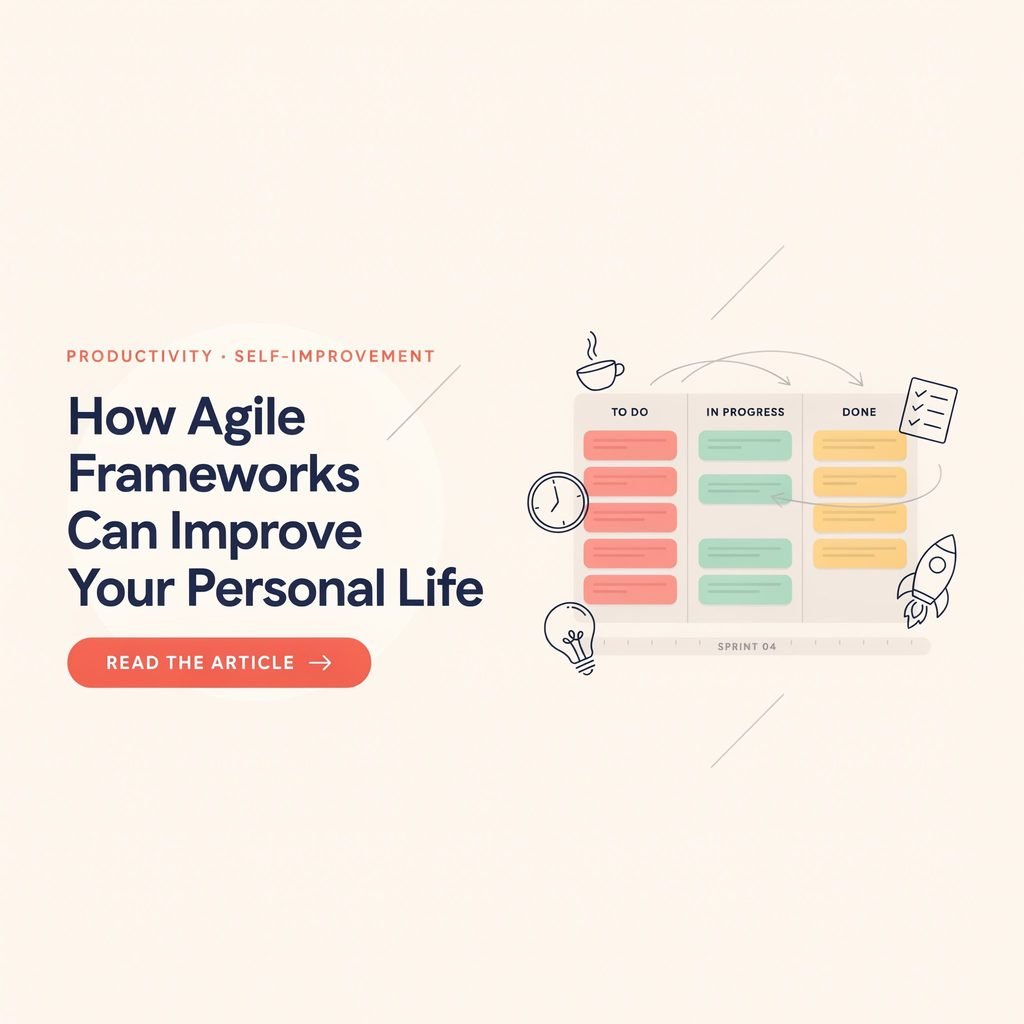
A Kanban board is the simplest visual productivity tool ever invented. Three columns: To-Do, Doing, Done. Write each task on a sticky note (physical or digital) and move it across as you work.
Limit your “Doing” column to two or three items max. This forces you to finish before starting something new—a principle called WIP (Work In Progress) limits. You can build one on a whiteboard, a sheet of paper, or free apps like Trello or Notion.
Timeboxing and Focus Blocks
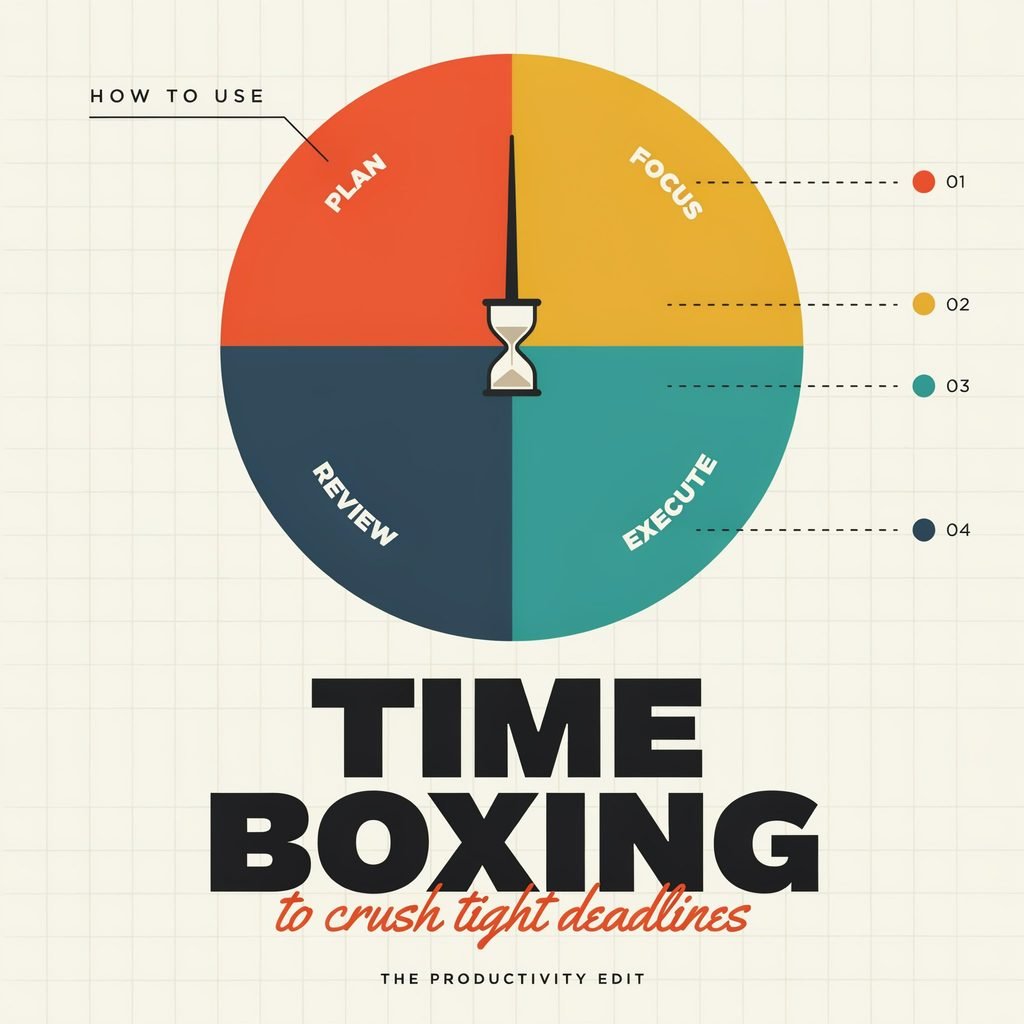
Pick a task. Set a timer for 25, 40, or 50 minutes. Work on only that task until the timer rings. Then take a five-minute break. Repeat.
Timeboxing and focus blocks protect you from the “I’ll just check my phone real quick” spiral. They’re especially powerful for deep work like writing, studying, coding a side project, or tackling a tough financial spreadsheet.
Weekly Review and Retrospective
Once a week—Sunday evening works well for most people—spend 15 to 30 minutes reflecting:
- What went well this sprint?
- What didn’t, and why?
- What will I adjust next week?
This weekly review and reflection is where continuous improvement in life actually happens. It turns random effort into a learning loop.
Real-Life Scenarios: Agile in Action for Americans
Let’s make this concrete. Here’s how four very different Americans use Agile principles at home, at work, and everywhere in between.
The Busy Professional: Balancing a 9–5 and a Side Hustle
Marcus, 34, works in marketing at a mid-size firm in Charlotte. He’s also building a freelance consulting practice on nights and weekends. Between client calls, LinkedIn learning courses, and trying to hit the gym, everything felt like it was slipping.
The problem: No consistency. He’d work on his side project for three nights straight, then burn out and skip it for two weeks.
The Agile setup: Marcus runs one-week sprints. Each Monday, he picks three priorities: one for his day job stretch goal, one for his freelance business, and one for health. He uses a simple Trello Kanban board and does a five-minute stand-up during his morning coffee.
The outcome: Within a month, he’d launched his consulting website, hit the gym eight times (his best month ever), and stopped feeling guilty about what he wasn’t doing. Clarity replaced chaos.
The Parent Managing a Household
Dana, 41, is a mom of two in suburban Columbus, Ohio. Between school pickups, soccer practice, meal planning, laundry mountains, and her part-time bookkeeping job, she felt like a project manager with no project plan.
The problem: Mental load. Everything lived in her head. Something always fell through the cracks, and she resented being the family’s default organizer.
The Agile setup: Dana created a family Kanban board on the fridge—magnets and index cards for the kids. Columns: To-Do This Week, Doing Today, Done. She runs a Sunday-night “family stand-up” where everyone picks their top tasks for the week. She timeboxes meal prep to Sunday afternoons, 2–4 p.m., no exceptions.
The outcome: Her ten-year-old started clearing the dishwasher without being asked (a small miracle). Dana reclaimed Thursday evenings for her book club. The mental fog lifted because the system held the information, not her brain.
The College Student Juggling Everything
Priya, 20, is a junior at the University of Texas at Austin, working 15 hours a week at a campus coffee shop while taking four classes.
The problem: Deadlines sneaked up on her. She’d pull all-nighters, skip workouts, and feel like she was always behind.
The Agile setup: Priya uses two-week sprints synced with her syllabus. Each Sunday, she breaks upcoming assignments into small tasks and loads them into her Notion board. Her daily stand-up happens during her walk to campus: three questions, voice memo into her phone.
The outcome: Her GPA ticked up half a point. She started hitting the rec center three times a week because it was a visible card in her “Doing” column, not a vague intention.
The Freelancer Juggling Multiple Clients
Jake, 29, is a freelance graphic designer in Portland working with four retainer clients while building a passive-income course.
The problem: Context-switching between clients ate his focus. Personal projects never got past the idea stage.
The Agile setup: Jake maintains one master backlog for all client deliverables and personal projects. He timeboxes each client’s work into dedicated focus blocks (9–11 a.m., 1–3 p.m., etc.) and reserves Friday mornings exclusively for his course. He does a weekly retrospective every Friday at 4 p.m. over a beer.
The outcome: He shipped his course’s first three modules in six weeks—something he’d been “planning” for over a year.
Step-by-Step: Setting Up Your Personal Agile System
Ready to build your own system? Here’s a repeatable, eight-step process you can set up in under an hour.
- Define your life areas. Pick four to six categories that matter to you: Health, Career, Relationships, Finances, Personal Growth, Home. These become the lenses through which you organize tasks.
- Create a master backlog for each area. Brain-dump everything. Don’t prioritize yet—just capture. This is your backlog of personal tasks, your single source of truth.
- Choose a sprint length. One week works great if your schedule shifts fast. Two weeks suits people with steadier rhythms. Start with one week; you can always extend later.
- Pick 2–4 high-impact goals for your first sprint. Ask yourself: “If I accomplished only these things in the next sprint, would I feel good about my progress?” Prioritizing high-value tasks over busywork is the heart of Agile time management.
- Break each goal into small, doable tasks. Instead of “Get in shape,” write “Walk 20 minutes, Mon/Wed/Fri” and “Pack gym bag Sunday night.” In Agile, these are called user stories. In life, they’re just tasks small enough that you’ll actually do them.
- Set up a simple Kanban board. Three columns: To-Do, Doing, Done. Use sticky notes on a wall, a whiteboard, Trello, Notion, or even a notes app. The medium matters less than the visual clarity.
- Schedule your rituals. Block a daily 5-minute stand-up (tie it to an existing habit like your morning coffee). Block a 20-minute weekly review on your calendar like it’s a doctor’s appointment.
- Adjust every sprint. After your weekly retrospective, tweak your board, swap out tasks, change your sprint length, or re-prioritize. The system serves you, not the other way around.
Tool tips: If you’re analog-inclined, a cheap whiteboard and a pack of sticky notes will outperform any app. If you love digital, Trello (free tier) is the fastest Kanban setup. Notion works beautifully if you want your backlog, board, and notes in one place. Google Calendar handles timeboxing and focus blocks well. Pick the tool with the least friction for you.
Common Mistakes and How to Avoid Them
Even with the best intentions, it’s easy to stumble. Here are the pitfalls I see most often—and the quick fixes.
- Overloading your sprint. You pick nine goals because you’re “motivated.” By Wednesday, you’ve abandoned them all. Fix: Cap it at four. If you finish early, pull one more from the backlog.
- Skipping the daily check-in and weekly review. “I’ll just wing it this week” turns into six weeks of drift. Fix: Attach your stand-up to a non-negotiable habit (coffee, commute, brushing teeth). Set a recurring calendar alert for your weekly review.
- Treating Agile as rigid. You beat yourself up for missing a day or changing a goal mid-sprint. Fix: Remember the core principle: respond to change over following a plan. Move the card. Reschedule the task. Adapt.
- Not celebrating small wins. You finish a sprint and immediately load up the next one without pausing. Fix: At your weekly review, name three things you accomplished. Say them out loud. Tell someone. Let the dopamine hit land.
FAQs: Agile for Personal Life
Do I need special software to use Agile in my life?
No. A sticky note on your bathroom mirror works. Apps like Trello or Notion add convenience, but the framework lives in your habits, not your tools.
How long should my personal sprints be?
Start with one week. If that feels too short to make progress, try two weeks. Avoid going beyond two weeks for personal goals—longer stretches lose urgency and invite procrastination.
Can I use Agile if I hate planning?
Yes. Agile is anti-big-plan. You’re only ever planning one to two weeks out, and you adjust constantly. The daily stand-up takes five minutes. That’s the whole “plan.”
Is Agile good for people with ADHD or irregular schedules?
Many people with ADHD find the short cycles, visual boards, and built-in flexibility genuinely helpful because the system externalizes memory and reduces decision fatigue. That said, adapt it freely. If daily stand-ups feel like too much, do every-other-day check-ins. The framework bends to you.
What if I fall off for a week?
You start a new sprint. No guilt, no backfilling old tasks. Agile assumes interruptions. That’s the whole point.
Conclusion: Your First Sprint Starts Now
How Agile frameworks can improve your personal life isn’t a theoretical question. It’s a practical one, answered every time you move a sticky note from “Doing” to “Done,” every time a five-minute morning check-in keeps you on track, every time a two-week sprint turns a vague wish into a concrete result.
Agile gives you a productivity system for busy Americans that’s flexible enough for real life—real commutes, real kid emergencies, real energy dips on a Wednesday afternoon. It replaces the guilt of an endless to-do list with the satisfaction of visible, iterative self-improvement.
You don’t need to overhaul everything today. You don’t need an app, a course, or a perfect setup. You need one sprint. One small board. One five-minute check-in tomorrow morning.
So here’s your call to action: Pick two goals. Set a one-week sprint. Draw three columns on a piece of paper. And on Sunday, look at what you moved to “Done.”
Notice the difference in your stress, your clarity, and your results. Then do it again.
That’s Agile. And it works just as well for your life as it does for a software team.