It’s 4:00 PM on a Sunday, and the familiar dread is already creeping in. You mentally rehearse the week ahead, anticipating the flood of unread emails, the back-to-back Zoom calls, and the inevitable Friday exhaustion. By the time Friday afternoon rolls around, you’ve worked 50 hours but feel like you’ve accomplished nothing of substance.
Most standard time management strategies fail because they focus on doing more. They encourage you to wake up at 4:30 AM, squeeze in a side hustle, and optimize every waking second. But speed is not the antidote to overwhelm.
The core premise of a truly stress-free workweek isn’t about working faster; it’s about removing decision fatigue through robust systems. When you rely on willpower to decide what to do next, you drain your mental battery by noon. When you rely on a system, you protect your cognitive resources for the work that actually moves the needle.
This isn’t about abstract theory. Below is a highly practical, step-by-step productivity checklist divided into five key weekly phases. Whether you are a corporate manager navigating hybrid teams or a freelancer juggling multiple clients, these micro-habits will help you reclaim your calendar, protect your focus, and finally log off on Friday feeling accomplished, not depleted.
PHASE 1: The Sunday/Monday Morning Reset
A chaotic Monday is almost always the result of a poorly planned Sunday. The goal of this phase is to clear your mental RAM and proactively design your week before other people’s priorities hijack your calendar.
Actionable Step 1: The 15-Minute Brain Dump
Your brain is for having ideas, not holding them. Carrying a running mental to-do list drastically increases your cognitive load and triggers low-grade anxiety. Take 15 minutes on Sunday evening or Monday morning to write down every open loop, task, and lingering thought. Don’t organize it yet—just get it out of your head and onto paper or into a digital notes app.
Actionable Step 2: Set 3 “Big Rocks” (The Rule of 3)
Look at your massive brain dump and identify the three most critical outcomes for the week. If you accomplish absolutely nothing else, these three “Big Rocks” will make the week a success. Write them down on a physical sticky note and place it on your monitor. This acts as your weekly priority matrix, ensuring that when urgent but unimportant tasks arise, you have a clear anchor to return to.
Actionable Step 3: Proactive Time Blocking
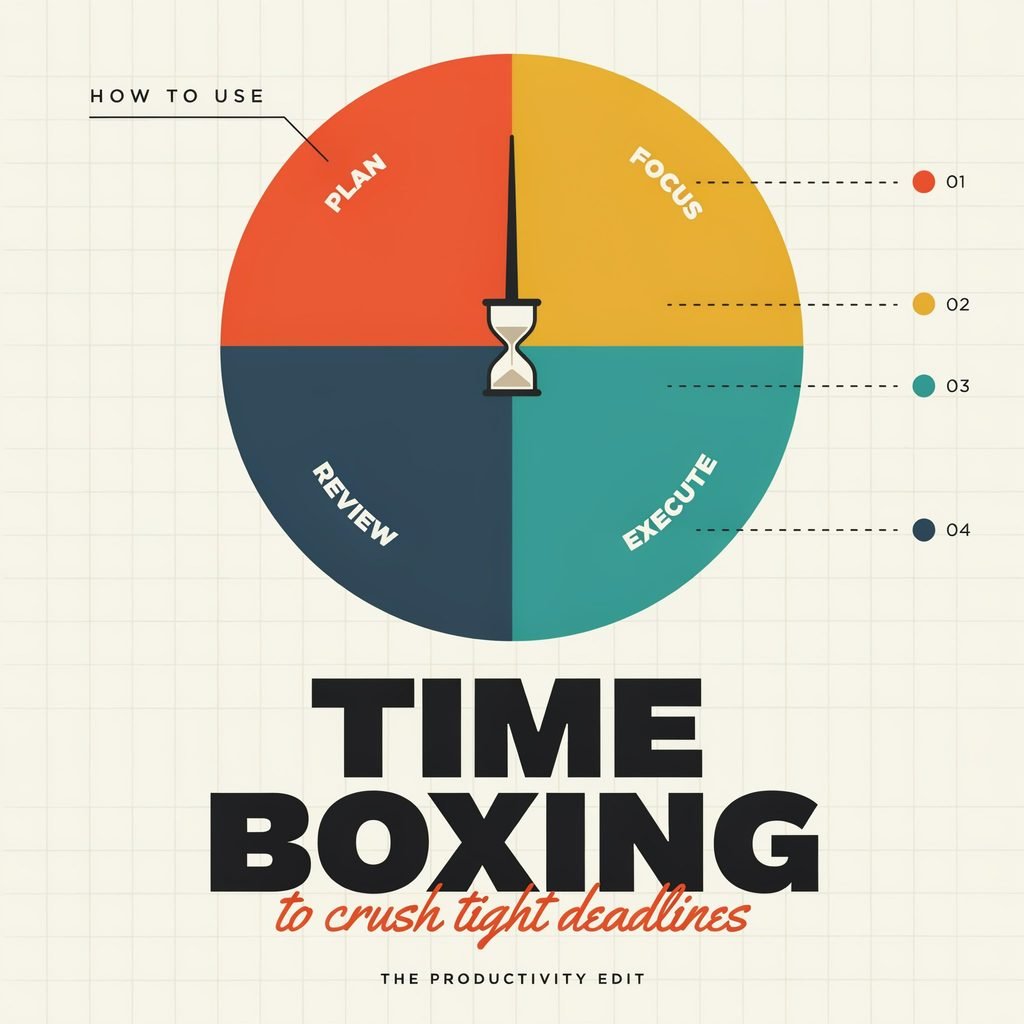
Most professionals make the mistake of scheduling meetings first and trying to squeeze their actual work into the margins. Flip the script. Open your calendar and schedule your deep work sessions before you accept any new meeting invites. Block out 90-minute focus blocks for your Big Rocks. Treat these appointments with yourself as non-negotiable client meetings.
Phase 1 Checklist Summary:
- [ ] Complete a 15-minute total brain dump.
- [ ] Identify and write down your 3 “Big Rocks” for the week.
- [ ] Time block 90-minute deep work sessions for your Big Rocks before accepting new meetings.
PHASE 2: Daily Execution & Flow State Management
Planning the week is only half the battle; executing it without burning out is where most knowledge workers stumble. This phase is about protecting your daily flow state and aligning your tasks with your biology.
Actionable Step 4: Structure the First 90 Minutes
The first 90 minutes of your workday are your most valuable cognitive real estate. Do not squander them on reactive tasks. Implement a strict rule: No email, no Slack, and no social media until you have spent at least 30 to 60 minutes on your #1 daily priority. If you open your inbox first thing in the morning, you instantly surrender control of your day to whoever emailed you last night.
Actionable Step 5: Batch Process Low-Cognitive Tasks
Context switching is the silent killer of productivity. Every time you pause a complex spreadsheet to answer a quick Slack message, your brain pays a “switching tax.” Instead of keeping your email tab open all day, use batch processing. Schedule two or three specific 20-minute windows (e.g., 11:30 AM and 4:00 PM) dedicated solely to clearing out your inbox, approving expenses, and sending quick replies.
Actionable Step 6: Leverage Energy Management Over Time Management
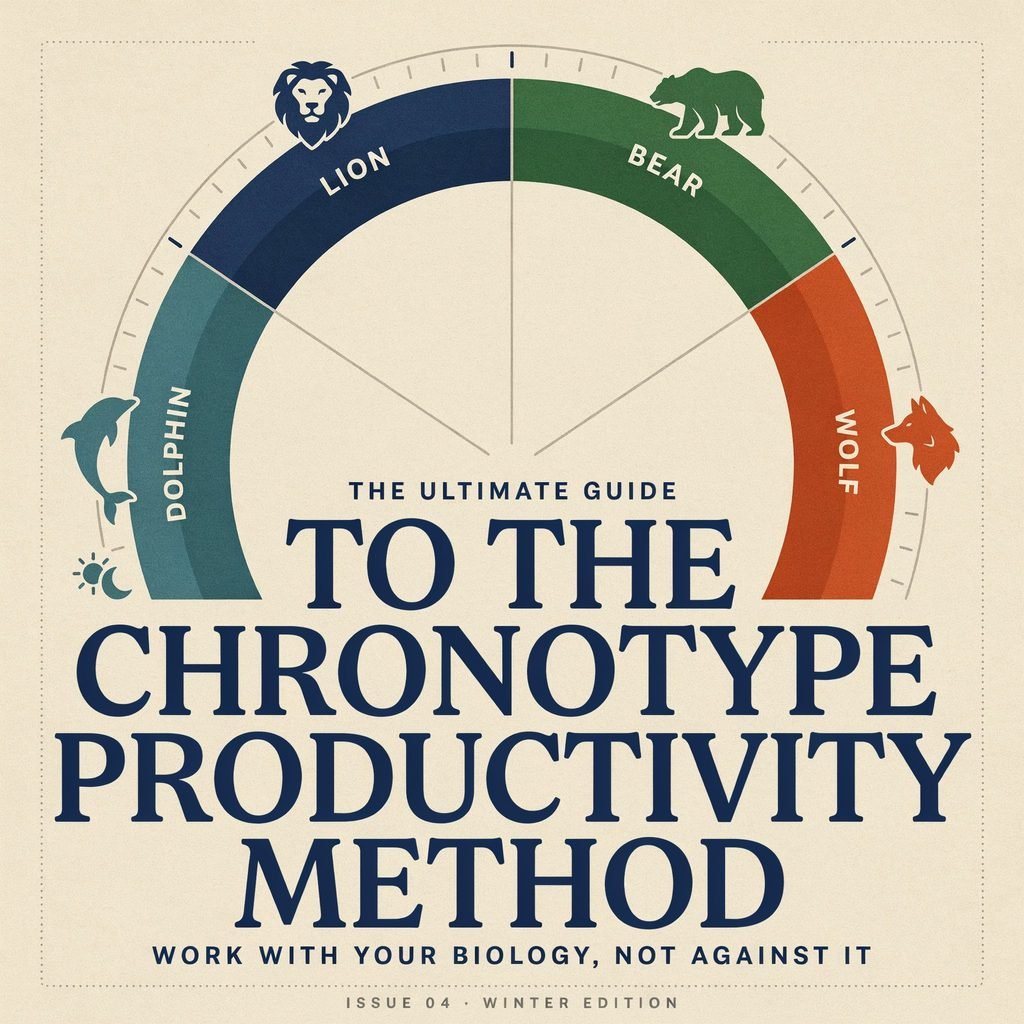
Time management strategies often ignore human biology. You cannot force deep analytical work when your brain is foggy. Track your energy levels for three days to identify your natural peaks and valleys. If you are a morning lark, schedule your most demanding strategic work before lunch. If you experience a 2:30 PM slump, use that low-energy window for administrative tasks, organizing your digital workspace, or attending low-stakes status meetings.
Phase 2 Checklist Summary:
- [ ] Spend the first 60 minutes of the day on your #1 priority (no inbox/Slack).
- [ ] Batch process emails and admin tasks into two dedicated 20-minute daily windows.
- [ ] Align complex tasks with your peak energy hours and admin tasks with your energy slumps.
PHASE 3: Digital Hygiene & Boundary Setting
Our tools are supposed to serve us, but for many professionals, they have become masters. Taming your digital environment is critical for long-term work-life balance and sanity.
Actionable Step 7: Tame Slack and Email Expectations
Slack fatigue is real, and it stems from a culture of immediate responsiveness. You must train your colleagues on how to communicate with you. Update your status to indicate when you are in a focus block. More importantly, champion async communication. Instead of calling a 30-minute meeting to discuss a project update, record a 3-minute Loom video or write a detailed bulleted update. Reserve synchronous communication (meetings and phone calls) only for complex problem-solving or sensitive interpersonal issues.
Actionable Step 8: Eliminate Micro-Interruptions
Research from UC Irvine shows that it takes an average of 23 minutes to regain deep focus after an interruption. If you are getting pinged every 10 minutes, you are literally never in a state of deep work. Turn off all non-essential desktop and mobile notifications. Close your email client and Slack when you are in a focus block. If someone truly has an emergency, they will pick up the phone.
Actionable Step 9: Establish a “Hard Stop” Shutdown Ritual
Remote and hybrid workers often struggle to separate their professional and personal lives because their office is also their living room. Boundary setting requires physical and psychological cues. Create a strict shutdown ritual for the end of your workday. Close all your browser tabs, tidy your physical desk, write down your top three priorities for tomorrow, and physically close your laptop. Say out loud, “Shutdown complete.” This signals to your brain that the workday is officially over.
Phase 3 Checklist Summary:
- [ ] Update communication norms to favor async communication over unnecessary meetings.
- [ ] Disable all non-essential push notifications on desktop and mobile devices.
- [ ] Execute a daily “hard stop” shutdown ritual to transition out of work mode.
PHASE 4: The Mid-Week Energy Pivot
By Wednesday afternoon, the pristine plan you made on Monday has likely collided with reality. Urgent fires have popped up, deadlines have shifted, and your energy is waning. This phase is about course correction and burnout prevention.
Actionable Step 10: The Wednesday Audit
Take 15 minutes on Wednesday afternoon to conduct a mid-week audit. Look at your calendar for Thursday and Friday. Are you still on track to complete your 3 Big Rocks? If unexpected urgent tasks have derailed your week, now is the time to ruthlessly triage. Run your remaining tasks through the Eisenhower Matrix. If a task is urgent but not important, delegate it. If it’s neither, delete it. Protect your Thursday and Friday focus blocks at all costs.
Actionable Step 11: Implement Micro-Rest Protocols
Pushing through the afternoon slump with a third cup of coffee is a recipe for evening exhaustion. Your brain needs active recovery to consolidate information and restore focus. Implement micro-rest protocols. Step away from your screens entirely for 10 minutes every two hours. Go for a walk outside without your phone, do some light stretching, or simply stare out a window. Active breaks protect against afternoon cognitive decline and keep your nervous system regulated.
Phase 4 Checklist Summary:
- [ ] Conduct a 15-minute Wednesday Audit to re-align priorities using the Eisenhower Matrix.
- [ ] Take a 10-minute screen-free micro-rest every two hours to prevent cognitive decline.
PHASE 5: The Friday Wrap-Up & Closing Loops
How you end your week dictates how you begin the next one. Leaving work scattered across your desk and your mind guarantees you will experience the Sunday Scaries.
Actionable Step 12: The 20-Minute Friday Shutdown Routine
Block out the last 20 minutes of your Friday specifically for a weekly review and shutdown routine. Process your physical and digital inboxes to get as close to inbox zero as possible. Update your project management boards (like Asana, Trello, or Jira) so you know exactly where everything stands. Finally, take five minutes to log your “wins” for the week. Acknowledging your progress triggers a dopamine release that reinforces positive working habits.
The Zeigarnik Effect and Weekend Stress
Psychologists refer to the “Zeigarnik Effect” as the brain’s tendency to remember uncompleted or interrupted tasks better than completed ones. When you leave open loops on Friday afternoon, your subconscious mind continues to chew on them all weekend, preventing true psychological detachment. By formally closing out your tasks and writing down exactly what you will tackle on Monday morning, you give your brain permission to fully disconnect and recharge.
Phase 5 Checklist Summary:
- [ ] Dedicate the last 20 minutes of Friday to a weekly review and updating project boards.
- [ ] Log 3 specific “wins” from the week to reinforce positive momentum.
- [ ] Close all open loops to prevent the Zeigarnik Effect from ruining your weekend.
Conclusion & Master Checklist
Achieving a stress-free workweek doesn’t require superhuman discipline; it requires intentional design. By shifting your focus from simply doing more to building systems that protect your time and energy, you transform your relationship with work. You stop reacting to the loudest voices in your inbox and start executing on the priorities that actually advance your career and your life.
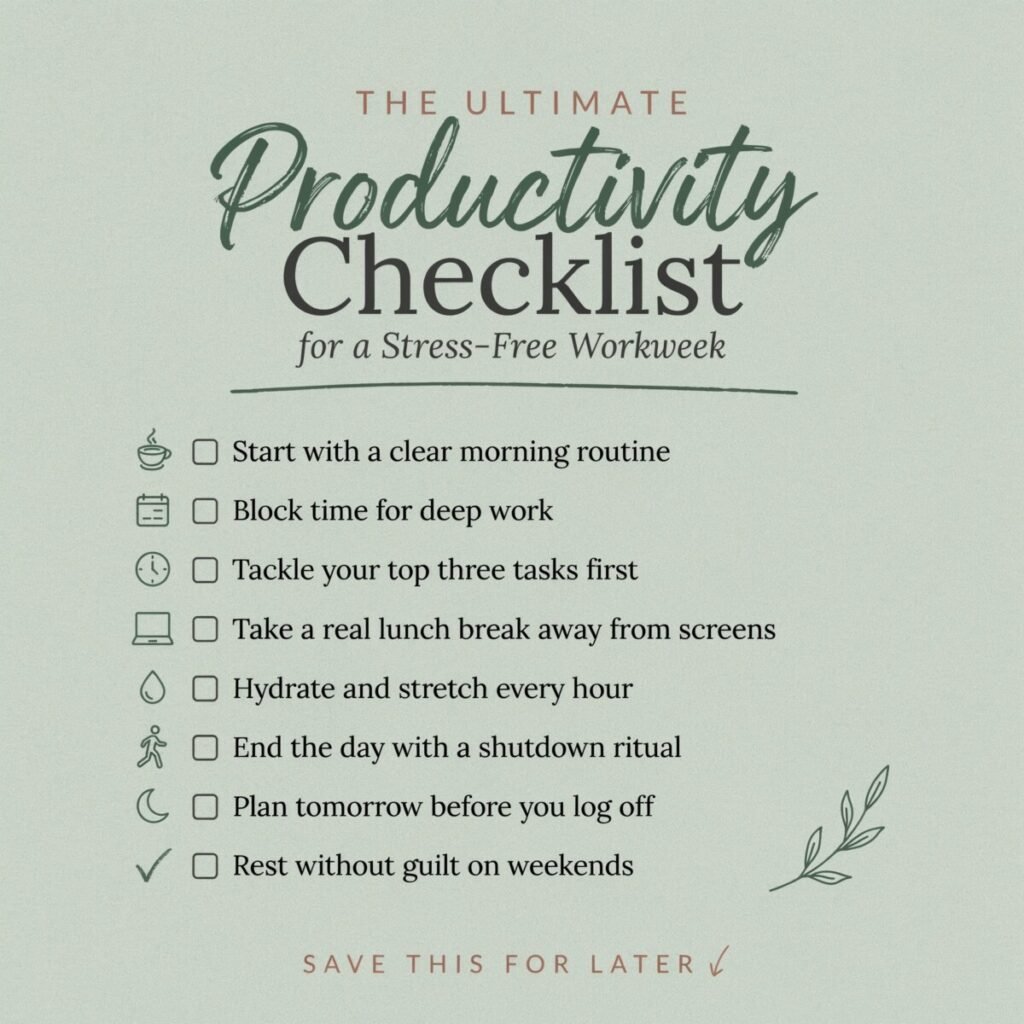
Print out or bookmark this master summary checklist and use it to guide your weekly rhythm.
The Ultimate Stress-Free Workweek Master Checklist
Phase 1: Sunday/Monday Reset
- [ ] 15-minute total brain dump.
- [ ] Define 3 “Big Rocks” for the week.
- [ ] Time block deep work sessions before scheduling meetings.
Phase 2: Daily Execution
- [ ] First 60 minutes dedicated to Priority #1 (no email/Slack).
- [ ] Batch process emails/admin into two 20-minute windows.
- [ ] Match task complexity to your natural energy peaks and valleys.
Phase 3: Digital Hygiene
- [ ] Shift to async communication to reduce meeting load.
- [ ] Turn off all non-essential push notifications.
- [ ] Perform a daily “hard stop” shutdown ritual.
Phase 4: Mid-Week Pivot
- [ ] Wednesday Audit to triage tasks via the Eisenhower Matrix.
- [ ] Take 10-minute screen-free micro-rests every two hours.
Phase 5: Friday Wrap-Up
- [ ] 20-minute weekly review and project board update.
- [ ] Log weekly wins and close open loops to prevent weekend stress.
Which step from this checklist will you implement first? Don’t try to overhaul your entire life by Monday morning. Pick just one micro-habit—like the first 90-minute focus block or the Friday shutdown ritual—and master it this week. Your future, well-rested self will thank you.