It’s 7:30 PM on a Sunday. You’re sitting on the couch, trying to enjoy the final hours of your weekend, but a low-grade hum of anxiety is creeping in. Your chest feels tight. The “Sunday Scaries” have officially arrived.
Fast forward to Monday morning. You open your laptop, and the chaos immediately swallows you whole. You are greeted by 142 unread emails, a Slack feed that looks like a scrolling stock ticker of demands, and a to-do list that somehow grew over the weekend. By 10:00 AM, you’re already in reactive mode, putting out fires and attending meetings that could have been emails. By Friday afternoon, you’re exhausted, yet you look back and wonder, “What did I actually accomplish this week?”
If this sounds painfully familiar, you aren’t alone. Most modern professionals are trapped in a cycle of reactive planning. We mistake motion for progress and busyness for effectiveness. But here is the hard truth: you cannot manage your time if you do not manage your energy and attention.
When you learn how to plan your week for maximum efficiency, the goal isn’t to pack every single minute with grueling productivity. That is a fast track to burnout. Instead, proactive weekly planning is about setting ironclad boundaries, protecting your cognitive resources, and working with your brain’s natural rhythms rather than against them. It is about shifting from a defensive posture—where the work dictates your schedule—to an offensive one, where you dictate the work.
Let’s ditch the toxic “hustle culture” mindset and build a sustainable, zero-stress approach to conquering your week.
The Science of Weekly Planning: Why Daily Lists Fail
To understand why we need a robust weekly planning system, we first have to look at why relying solely on a daily to-do list is a recipe for disaster.
The debate of daily vs weekly planning isn’t really a debate; they serve entirely different purposes. Daily planning is tactical; it’s about execution. Weekly planning is strategic; it’s about vision. When you only plan day-by-day, you lack the 30,000-foot view required to prioritize long-term goals. You become highly susceptible to “firefighting”—spending your days reacting to whatever urgent (but ultimately unimportant) crisis lands in your inbox.
Furthermore, failing to plan your week in advance triggers several well-documented psychological traps:
- Decision Fatigue: Every time you ask yourself, “What should I work on next?” you deplete a finite reserve of willpower. By the time you sit down to do the actual work, your brain is already tired from making micro-decisions. Planning ahead allows you to beat decision fatigue by making your choices when you are fresh, so you can simply execute when it’s time to work.
- The Zeigarnik Effect: This psychological principle states that people remember uncompleted or interrupted tasks better than completed ones. In practical terms, “open loops” (unwritten tasks, vague obligations) take up valuable mental RAM, creating background anxiety. Getting them out of your head and onto a structured plan closes these loops.
- Parkinson’s Law: This adage states that “work expands so as to fill the time available for its completion.” If you give yourself all day to write a report, it will take all day. If you assign it a strict two-hour window, you will likely finish it in two hours. Weekly planning forces you to assign realistic boundaries to your tasks.
💡 Callout: The Cognitive Cost of Context Switching
According to the American Psychological Association, shifting between tasks (context switching) can cost as much as 40% of someone’s productive time. A structured weekly plan batches similar tasks together, drastically reducing the mental toll of switching gears.
Step-by-Step Blueprint: The “Zero-Stress” Weekly Planning System
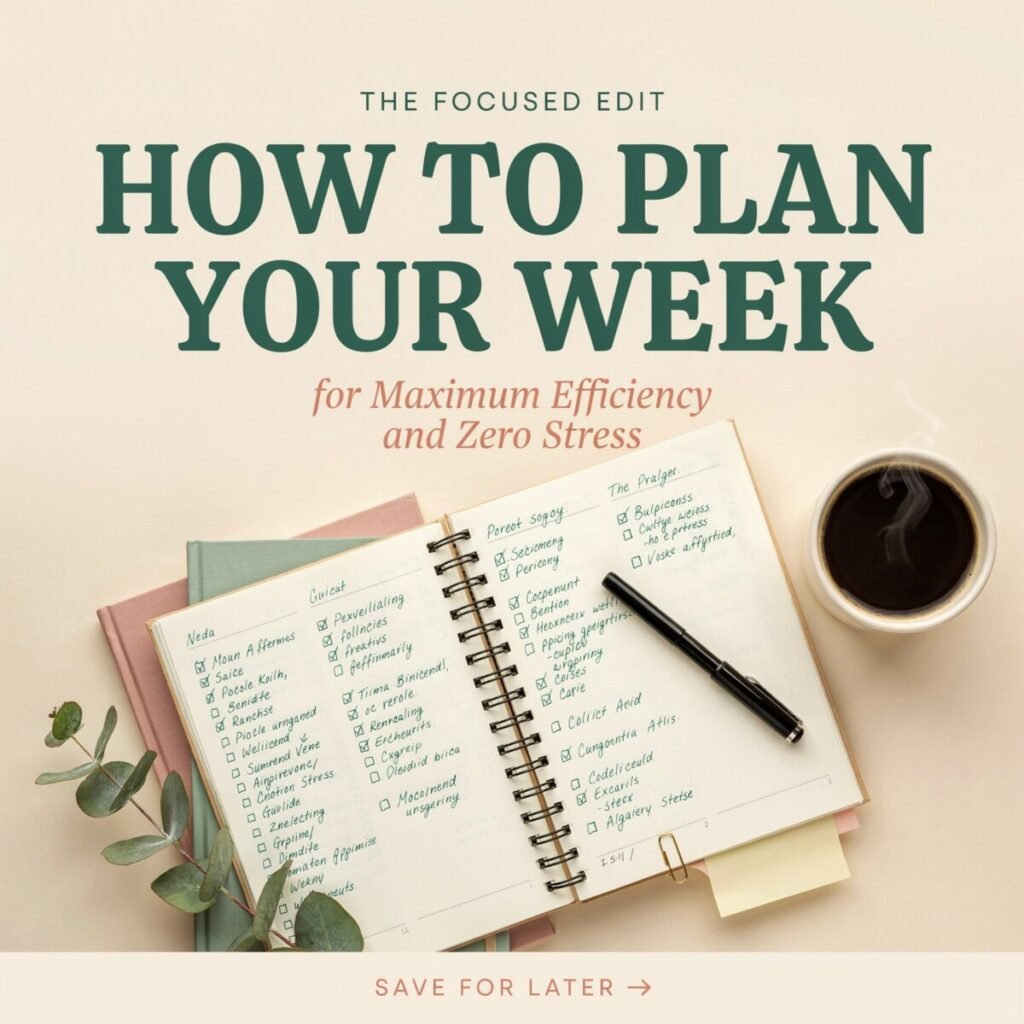
To increase productivity at work without sacrificing your sanity, you need a reliable framework. Carve out 45 to 60 minutes every Friday afternoon (or Sunday evening, if you prefer) to run through this exact five-step process.
Step 1: The Weekly Mind Sweep (Clearing Cognitive Clutter)
Before you can organize your week, you must declutter your brain. This step is heavily influenced by David Allen’s Getting Things Done (GTD) methodology. The goal of the Mind Sweep is to capture every single open loop, obligation, idea, and lingering task currently bouncing around in your head.
Do not organize yet; just capture. Open a blank digital document or grab a physical piece of paper and write down everything.
- “Email Sarah about the Q3 budget.”
- “Schedule dentist appointment.”
- “Draft the proposal for the new client.”
- “Buy dog food.”
By externalizing your workload management onto paper, you immediately neutralize the Zeigarnik Effect. Your brain no longer has to expend energy “holding” onto these reminders. Once everything is captured, you can ruthlessly sort through the list. Delete what doesn’t matter, delegate what you can, and defer the rest to your master task list. You are now working from a place of clarity, not chaos.
Step 2: Time-Auditing & Energy Alignment
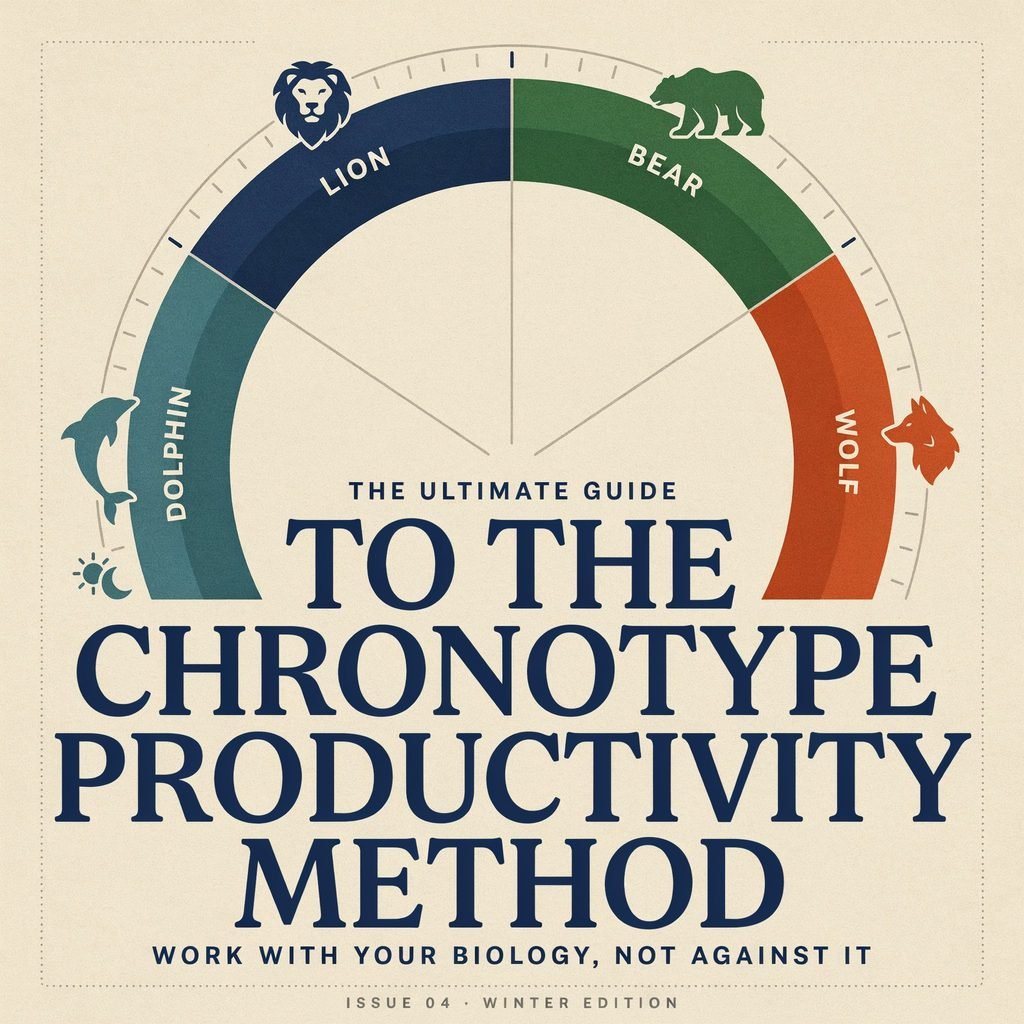
Most professionals treat all hours of the workday as equal. They are not. Energy management is vastly more important than time management. You likely have specific windows during the day where your focus is laser-sharp, and other windows where you struggle to keep your eyes open.
Audit your natural circadian and ultradian rhythms:
- High-Energy Windows (Usually mornings for most, but not all): This is when you should schedule deep work—complex problem solving, strategic writing, or coding. Protect this time fiercely.
- Low-Energy Windows (Usually mid-afternoon): This is when your cognitive battery dips. Schedule administrative tasks, routine emails, expense reports, or low-stakes meetings during these blocks.
When you align your tasks with your natural energy peaks and valleys, you stop fighting your own biology. You will find that a task taking you two hours in a low-energy slump can be completed in 45 minutes during a high-energy peak.
Step 3: Defining “The Big 3” (Prioritizing High-Impact Needle-Movers)
A massive mistake professionals make is looking at a list of 20 tasks and trying to do them all. This leads to shallow work and a profound sense of overwhelm. Instead, practice aggressive priority management by defining your “Big 3.”
Look at your master list and ask yourself: “If I could only accomplish three things this week to feel satisfied with my progress, what would they be?”
These three items should be high-impact tasks that move the needle on your long-term goals. To identify them, you can use two classic frameworks:
- The Eisenhower Matrix: Filter your tasks by Urgency and Importance. Your Big 3 should almost always come from the “Important, but Not Urgent” quadrant (e.g., strategic planning, skill building, relationship nurturing).
- The Pareto Principle (80/20 Rule): Identify the 20% of your efforts that will yield 80% of your desired results.
📌 The “Big 3” Framework in Action
- Bad Weekly Goal: “Work on the marketing campaign, answer all emails, attend team syncs, update the CRM.”
- Good Weekly Goal (The Big 3): 1) Finalize the Q4 marketing copy. 2) Close the Henderson account. 3) Hire the new freelance designer.
Everything else is secondary. If you accomplish your Big 3, the week is a success, even if your inbox isn’t at zero.
Step 4: Time Blocking & Buffer Zones
Now it is time to merge your task list with your calendar. This is where calendar management becomes your superpower. Do not just work off a to-do list; give every task a specific home on your schedule using time blocking templates.
Time blocking involves dividing your day into distinct blocks of time, each dedicated to a specific task or category of work.
- 8:00 AM – 10:00 AM: Deep Work (Big 3 Task #1)
- 10:00 AM – 10:30 AM: Email & Slack Triage
- 10:30 AM – 12:00 PM: Team Meetings & Collaboration
- 1:00 PM – 2:30 PM: Focused focus blocks (Big 3 Task #2)
However, the secret to a zero-stress week is not just the blocks; it is the buffer zones. The universe hates a perfectly packed calendar. Emergencies will happen, tech will fail, and meetings will run over. If your calendar is booked back-to-back from 8 to 5, a single 30-minute delay will derail your entire week.
Schedule at least 60 to 90 minutes of “white space” or buffer time every single day. Use this time to catch up on overflow, handle unexpected fires, or simply take a walk to reset your brain. If no emergencies arise, you get ahead on next week’s work.
Step 5: Shutting Down & Reviewing
The final step of the weekly planning process is establishing a hard boundary between your professional and personal life. Remote and hybrid work has severely blurred these lines, making a deliberate shutdown ritual a critical work-life balance strategy.
At the end of your workday (and especially at the end of your workweek), take 10 minutes to review what you accomplished. Check off your completed tasks, migrate unfinished items to next week’s list, and tidy your physical and digital workspace.
Then, say a phrase out loud or write it down: “Shutdown complete.”
This psychological trigger signals to your brain that work is over. It is a vital burnout prevention tactic. When you shut down completely, you allow your subconscious mind to rest and process information, which is often when our most creative “aha!” moments occur.
Common Pitfalls & How to Avoid Them
Even with the best productivity hacks for professionals, human nature and workplace realities can derail your plans. Here are the most common pitfalls and how to sidestep them.
1. Over-Scheduling and the Planning Fallacy
The Planning Fallacy is a cognitive bias where we consistently underestimate how long a task will take, even if we have done it a dozen times before. We assume a best-case scenario where there are no interruptions.
- The Fix: Apply “Hofstadter’s Law,” which playfully states that “It always takes longer than you expect, even when you take into account Hofstadter’s Law.” When time blocking, multiply your initial time estimate by 1.5. If you think a report will take an hour, block out an hour and a half.
2. Failing to Account for Context Switching and Meeting Bloat
If your calendar looks like a game of Tetris with 15 different 30-minute meetings scattered throughout the day, you are not being productive; you are being fragmented. It takes an average of 23 minutes to regain deep focus after an interruption.
- The Fix: Practice “Meeting Batching.” Try to stack all your internal meetings on specific days (like Tuesdays and Thursdays) or cluster them back-to-back in the afternoons. Defend your mornings for uninterrupted deep work. If a meeting lacks a clear agenda, politely decline or ask for a summary via email.
3. Ignoring Personal and Wellness Priorities
Many professionals plan their work tasks down to the minute but leave their personal well-being to chance. They assume they will “find time” to go to the gym, meal prep, or spend quality time with their kids. When work inevitably expands, wellness is the first thing sacrificed.
- The Fix: Schedule your non-negotiables first. Block out your gym time, your school drop-offs, and your family dinners on your calendar before you add a single work task. Treat these personal blocks with the same respect you would give a meeting with your CEO. True efficiency encompasses your whole life, not just your desk time.
Conclusion & Actionable Takeaways
Learning how to effectively plan your week for maximum efficiency is not about becoming a relentless, unfeeling productivity robot. It is about designing a workweek that respects your humanity, protects your mental health, and allows you to do your best work without the crushing weight of anxiety. It is a skill that takes a few weeks to master, so be patient with yourself as you transition from reactive firefighting to proactive design.
Here is your quick-reference cheat sheet to implement this week:
- Ditch the Daily Grind: Embrace a strategic weekly planning system to maintain a high-level vision, rather than just drowning in daily tactics.
- Clear the Mental RAM: Do a weekly “Mind Sweep” to defeat the Zeigarnik Effect and beat decision fatigue.
- Protect Your Peaks: Align your high-impact tasks with your natural high-energy windows, and save low-energy admin work for the afternoon slumps.
- Rule of Three: Identify your “Big 3” needle-movers using the Eisenhower matrix or 80/20 rule. Ignore the trivial many.
- Block and Buffer: Use time blocking templates to map your day, but always include 90-minute buffer zones for the unexpected.
- Shut Down Hard: Implement a daily shutdown ritual to enforce a healthy work-life balance strategy and ensure true burnout prevention.
This upcoming week, don’t let your inbox dictate your worth or your schedule. Take 45 minutes this Friday to run through this blueprint. Claim your time, protect your energy, and step into Monday morning not with a sense of dread, but with quiet, unshakeable confidence. You’ve got this.