We’ve all seen the viral social media posts glorifying the ultimate “hustle culture” myth. You know the one: the tech CEO who wakes up at 4:00 AM, chugs an iced cold brew, takes an ice bath, and grinds through back-to-back Zoom calls for 16 hours straight.
It looks impressive, but here’s the unvarnished truth—rigid, hyper-optimized routines like this fail most people within a week. If you’ve ever tried to force yourself into a cookie-cutter schedule only to end up exhausted, frustrated, and right back where you started, you aren’t alone.
True productivity isn’t about squeezing every last drop of labor out of your waking hours. It’s about doing what actually matters without frying your nervous system in the process.
Building a sustainable productive daily routine requires a fundamental mindset shift. You have to stop treating yourself like a machine with infinite bandwidth and start treating yourself like a human being with biological limits.
The secret isn’t waking up earlier or working longer; it’s working smarter by aligning your schedule with your natural energy rhythms. A truly effective blueprint works with your human biology, not against it.
When you design your day around your personal peaks and valleys, you protect your mental health, elevate the quality of your output, and finally achieve that elusive work-life balance. Let’s break down the science-backed framework to build a routine that actually sticks.
Phase 1: The Biological Foundation
Before you open your calendar and start color-coding your week, you need to understand your body’s internal clock. Circadian rhythm productivity is the concept that our cognitive abilities, focus, and physical energy fluctuate predictably throughout the day.
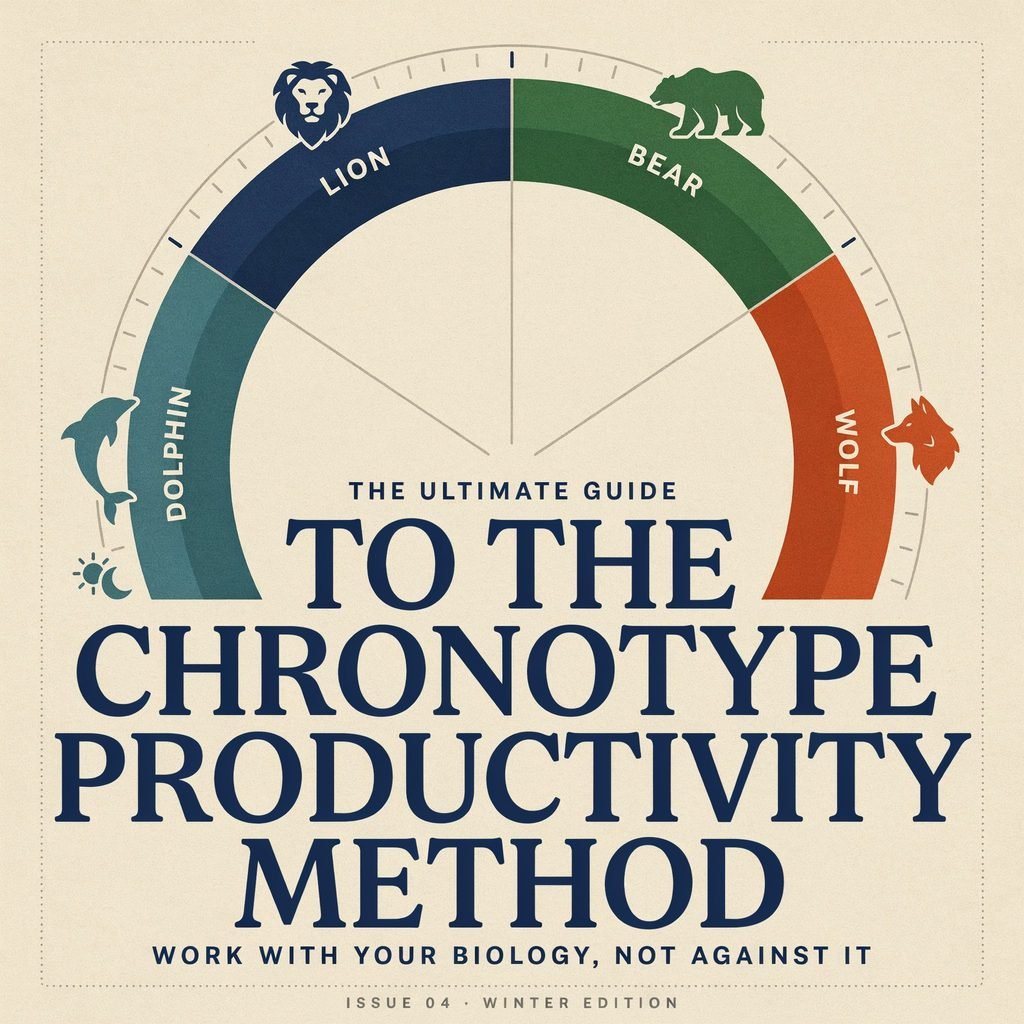
Dr. Michael Breus, a clinical psychologist and sleep expert, categorizes people into four main chronotypes: Larks (early risers), Owls (night dwellers), Third Birds (the middle majority), and Dolphins (light sleepers with erratic energy). Understanding whether you are a Lark, Owl, or Third Bird completely changes how you should structure your day.
Larks should front-load their most creative and analytical work before noon. Owls should use the morning for emails, meetings, and planning, saving their deep work for the late afternoon or evening.
Third Birds, who make up about 65% of the population, typically peak in the late morning, experience a noticeable slump in the early afternoon, and recover for a second, smaller peak in the early evening. By mapping your tasks to these natural waves, you eliminate the need for sheer willpower to get things done.
The ultimate goal is to align your most demanding, high-cognitive tasks with your peak energy hours. When you do this, you drastically reduce the mental friction required to start difficult work.
Conversely, saving low-stakes administrative tasks for your natural energy dips is a highly effective strategy for cognitive fatigue prevention. You can’t manage what you don’t measure, so it’s time to audit your biology.
How to Audit Your Energy Levels
To find your biological sweet spot, conduct a simple 3-day energy audit over a normal workweek. Set a recurring alarm on your phone every two hours to check in with your body.
On a scale of 1 to 10, rate your mental clarity and physical vitality at each interval. Jot down what you were doing right before the alarm, like finishing a heavy lunch or returning from a walk.
After three days, review your data to spot your personal peaks and valleys. This data becomes the bedrock of your new schedule.
Key Takeaway: Stop managing your time and start managing your energy. An hour of work during your biological peak is worth three hours of work during your biological trough.
Phase 2: Architecting the Workday Framework
Once you know when you work best, it’s time to decide how you work. This is where intentional scheduling transforms a chaotic to-do list into a streamlined execution engine.
Deep Work vs. Shallow Work
Coined by computer science professor Cal Newport, “Deep Work” refers to professional activities performed in a state of distraction-free concentration that push your cognitive capabilities to their limit. These are the tasks that create new value, improve your skills, and move the needle on major projects.
“Shallow Work,” on the other hand, consists of non-cognitively demanding, logistical-style tasks often performed while distracted. Think answering routine emails, scheduling meetings, or filling out expense reports.
Effective deep work scheduling requires protecting your peak energy windows fiercely. Shallow work should be batched together and relegated to your energy valleys.
| Feature | Deep Work Schedule | Shallow Work Schedule |
|---|---|---|
| Cognitive Demand | High (Requires intense focus) | Low (Logistical, repetitive) |
| Environment | Distraction-free (Phone on DND, tabs closed) | Flexible (Can handle interruptions) |
| Time of Day | Biological Peak Hours | Biological Troughs / Post-Lunch |
| Duration | 90 to 120-minute uninterrupted blocks | 15 to 30-minute batched intervals |
The Time Blocking Framework & Task Batching
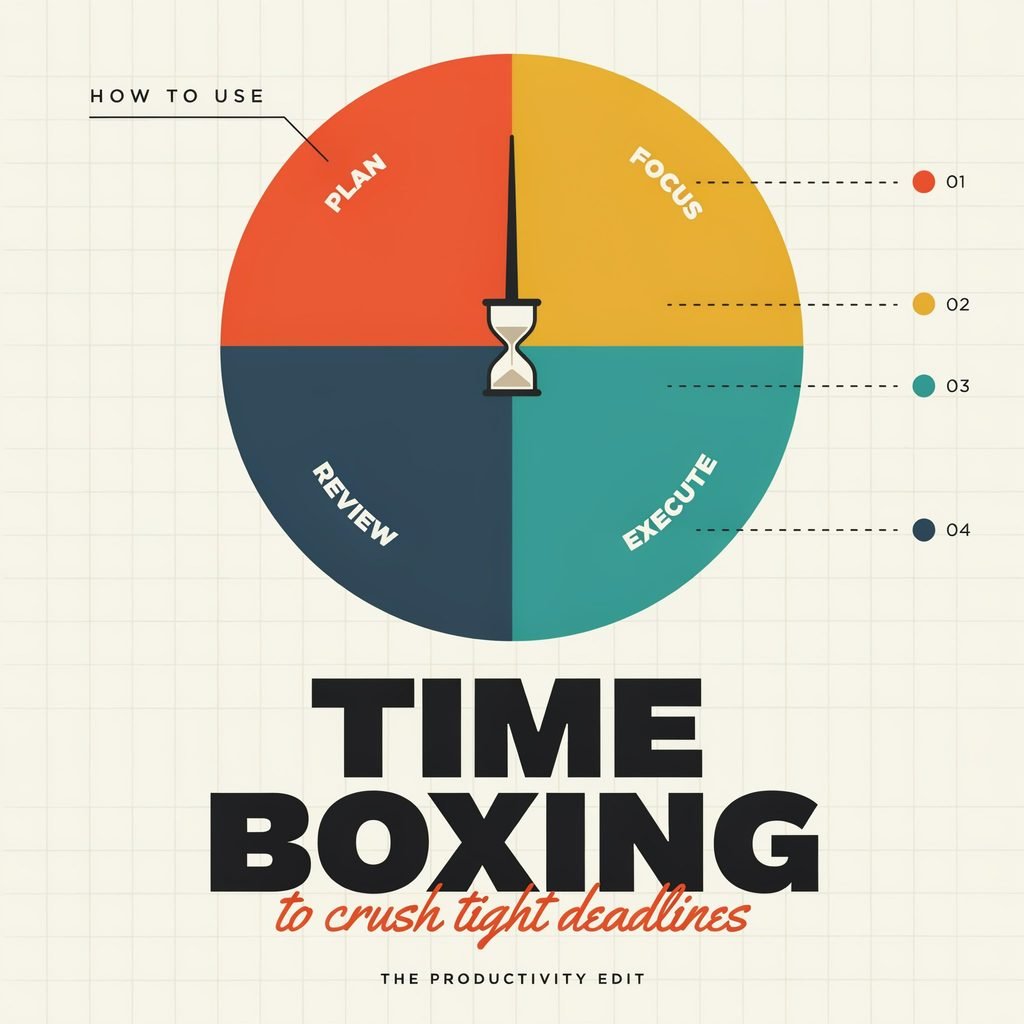
To execute this split, you need a robust time blocking framework. Instead of working from an endless, reactive checklist, you assign every task a specific time slot on your calendar.
This forces you to be realistic about how long things actually take. Time blocking also combats Parkinson’s Law, which states that work expands to fill the time allotted for its completion.
When you give yourself a strict 90-minute window to draft a proposal, you naturally increase your focus and efficiency. Furthermore, visually seeing your day mapped out reduces the cognitive load of constantly deciding what to do next.
Couple time blocking with task batching to eliminate context switching penalties. Jumping from writing a report to checking Slack and back again carries massive “attention residue,” often taking over 20 minutes to regain deep focus.
By batching similar shallow tasks—like processing all emails at 11:30 AM and 4:00 PM—you preserve your mental bandwidth for what truly matters.
The “Big 3” Rule & Daily Planning Template
Overwhelm is the enemy of execution, especially for freelancers and entrepreneurs juggling multiple hats. To combat this, use a daily planning template centered around the “Big 3” rule.
Every evening, identify the three most critical outcomes you must achieve the next day. If you only accomplish these three things, the day is a resounding success.
The Non-Negotiable Buffer Time
No matter how perfectly you plan, life happens and urgent fires need putting out. If your calendar is packed back-to-back, one minor delay will derail your entire day.
Always schedule 30-to-45-minute “buffer blocks” between major tasks. This blank space absorbs the chaos and keeps your stress management routines intact.
Pro Tip: Treat your deep work time blocks with the same respect you would give a meeting with your most important client. You wouldn’t blow them off, so don’t blow off your appointment with yourself.
Phase 3: Anchoring Habits with Psychology
A schedule tells you what to do, but habits dictate whether you actually do it. Relying on sheer motivation to stick to your new routine is a recipe for failure because motivation is a finite resource.
Instead, you need to leverage behavioral psychology to make your productive daily routine automatic and effortless.
The Habit Stacking Method
Popularized by James Clear in his bestselling book Atomic Habits, the habit stacking method is a highly effective way to build new behaviors. The formula is simple: Current Habit + New Habit = Automatic Routine.
Instead of trying to carve out entirely new time slots, you anchor a new habit to an existing one that is already hardwired into your brain. For example, if you want to incorporate daily strategic planning but always forget, you might stack it like this:
“After I pour my morning coffee (current habit), I will spend five minutes reviewing my Big 3 tasks for the day (new habit).” By tying the new behavior to an established neural pathway, you drastically reduce the mental friction required to initiate the action.
Friction Reduction and Environmental Design
Human beings naturally follow the path of least resistance. If you want to adopt good habits, you must lower the activation energy required to start them.
Conversely, if you want to break bad habits, you must increase the friction. Lowering friction for success looks like laying out your workout clothes or opening your primary working document the night before.
Increasing friction for distractions means logging out of social media accounts or using website blockers that require a complex password to override during deep work blocks. When you engineer your environment to support your goals, willpower becomes a backup system rather than the primary engine of your success.
This environmental design is a core pillar of sustainable stress management routines. It removes the internal conflict between what you should do and what is easy to do.
Phase 4: Morning & Evening Bookends
How you start and end your day dictates the quality of everything in between. Think of your morning and evening routines as the bookends that hold your productive hours upright.
The Morning Bookend: Proactive Focus
The biggest mistake most professionals make is starting their day in a reactive state. Rolling over in bed and immediately checking emails or Slack messages hands the steering wheel of your attention over to other people’s agendas.
A true morning routine for success prioritizes proactive focus and biological priming before screen time. Within 30 minutes of waking, get natural sunlight in your eyes to halt melatonin production and set your circadian rhythm.
Drink a large glass of water to rehydrate your brain after 8 hours of sleep, and engage in light movement to increase blood flow. Spend your first waking hour on your own priorities before allowing the outside world to intrude.
The Evening Shutdown Ritual
Just as you need a ramp-up period in the morning, you need a definitive ramp-down period in the evening. Blurring the lines between work and personal life is a primary driver of modern burnout.
Protecting your work-life balance requires a hard psychological boundary known as an Evening Shutdown Ritual. This 15-minute routine signals to your brain that the workday is officially over.
Review your calendar for tomorrow, write down your Big 3 tasks, and do a final inbox sweep. Physically close your laptop and tidy your workspace to create a clean slate for the morning.
The Golden Rule of Shutdown: Never rely on your memory to hold onto tomorrow’s tasks. Writing them down physically transfers the cognitive burden from your brain to the paper, allowing you to actually relax.
By deliberately closing open loops, you prevent work-related anxiety from hijacking your evening downtime. This ensures you get the restful sleep necessary to tackle tomorrow with renewed vigor.
Common Pitfalls & How to Reset When Routine Breaks
Even the most meticulously designed productive daily routine will eventually break. You will get sick, you will travel, or a massive client emergency will blow up your carefully time-blocked calendar.
Avoiding the “All-or-Nothing” Trap
The most common pitfall is the “all-or-nothing” mentality. If you miss your 6:00 AM workout or get derailed by 10:00 AM, it’s easy to throw your hands up and declare the day a total loss.
Instead, adopt a “never miss twice” philosophy. If your morning routine falls apart, pivot gracefully and focus on executing a flawless afternoon.
Quarterly Audits
Furthermore, your routine shouldn’t be set in stone. As your career evolves, your family grows, or the seasons change, your energy levels and responsibilities will naturally shift.
Conduct a “Quarterly Audit” every three months to evaluate your system. Sit down and ask yourself what is working, what feels like a chore, and where you are experiencing friction.
Tweak your time blocks and habit stacks accordingly. Iteration and flexibility are the true keys to long-term sustainability.
Conclusion: Consistency Beats Intensity
Designing a daily routine isn’t about achieving a state of perpetual, grinding hustle. It’s about creating a sustainable architecture for your life that honors your biology, protects your focus, and safeguards your peace.
When you leverage circadian rhythms, time blocking, and behavioral psychology, you stop fighting against yourself and start working in flow. Remember that consistency will always beat intensity.
Your Call to Action: Don’t try to implement everything in this guide at once. Choose one single adjustment to test tomorrow morning.
Maybe it’s drinking water before checking your phone, or identifying your Big 3 tasks tonight. Pick one, execute it, and build your blueprint one brick at a time.