We live in an era of endless notifications, open browser tabs, and constant interruptions. Whether you are a student cramming for finals, a remote worker juggling Zoom calls, or a freelancer trying to meet a tight deadline, maintaining deep concentration can feel nearly impossible. Your attention span is under constant attack, and the result? Procrastination, stress, and a nagging feeling that you are never truly getting enough done.
This is where the power of intentional focus shifting comes in. Instead of relying on fleeting motivation or complicated productivity hacks, modern experts recommend a highly structured approach to getting things done. Enter the Pomodoro Technique, a simple yet profoundly effective time management technique that has helped millions of people reclaim their workdays. In this ultimate guide, we will explore exactly how this productivity method works, why it is so effective, and how you can adapt it to work smarter, not harder.
What Is the Pomodoro Technique?
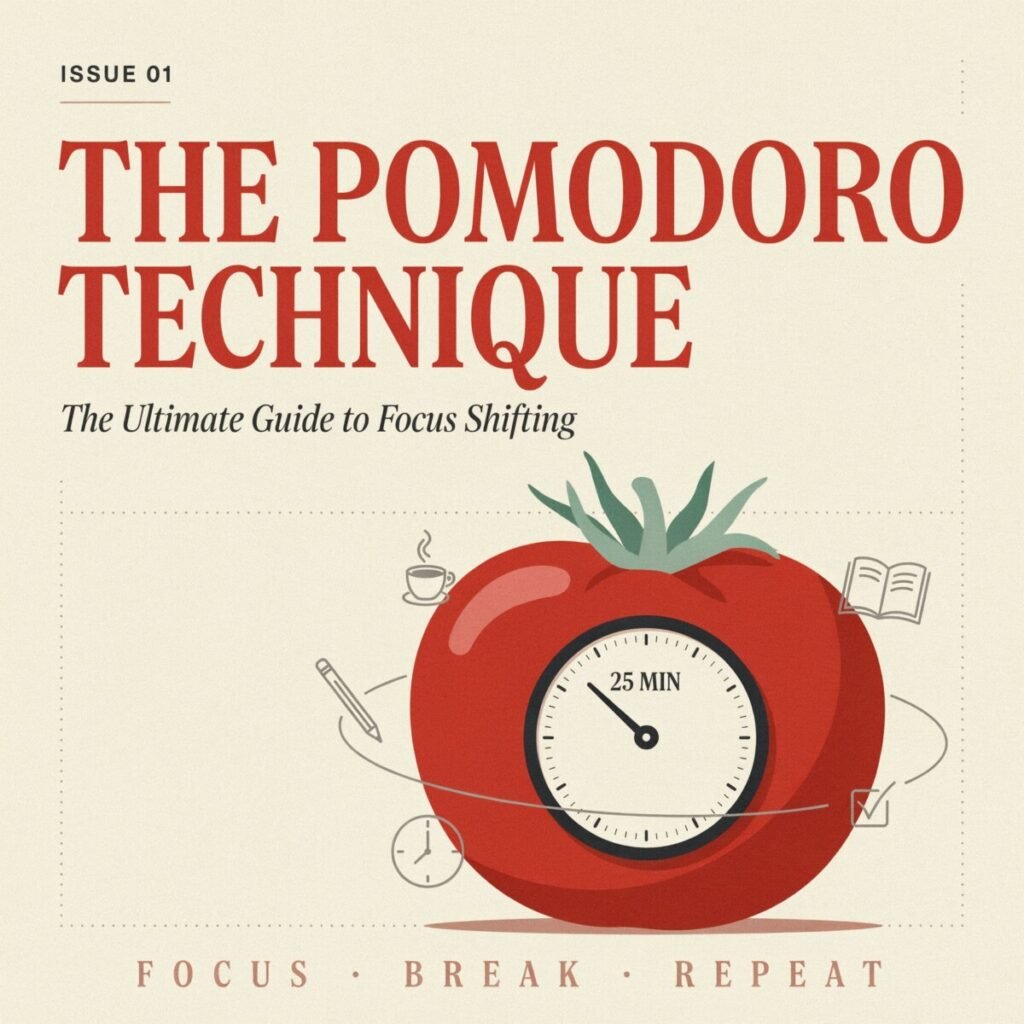
At its core, the Pomodoro Technique is a time management technique that encourages people to work in intervals, traditionally separated by short breaks. The name might sound fancy, but its origins are wonderfully simple. In the late 1980s, Francesco Cirillo, a university student in Italy, was struggling to stay focused on his studies. He grabbed a kitchen timer shaped like a tomato (the word “pomodoro” translates to tomato in Italian), set it for 10 minutes, and challenged himself to work without interruption until it rang.
This small experiment blossomed into a global phenomenon. Today, the standard format consists of 25-minute work sessions followed by a 5-minute break. Each 25-minute block is referred to as one “Pomodoro.” After completing four consecutive Pomodoros, you take a longer, more restorative break of 15 to 30 minutes. It sounds almost too easy, but this elegant structure leverages the natural rhythms of the human brain to maximize output and minimize fatigue.
How the Pomodoro Technique Works
Getting started with this concentration technique requires nothing more than a task list, a timer, and a commitment to the process. Here is the step-by-step breakdown of how a typical session unfolds:
- Choose a single task: Pick one specific task you want to accomplish. It could be writing a report, studying a textbook chapter, or clearing out your inbox.
- Set your focus timer: Set a timer for 25 minutes. During this window, you must commit to working on that single task with zero interruptions.
- Work deeply until the timer rings: Immerse yourself in deep work. If a distracting thought pops into your head (like “I need to buy dog food”), write it down on a piece of paper and immediately return to your task.
- Take a short break: When the timer rings, stop working immediately. Take a 5-minute break to stretch, grab a glass of water, or rest your eyes. This utilizes short breaks for productivity, allowing your brain to reset.
- Repeat the cycle: Start another 25-minute session.
- Take a longer break: After you have completed four 25-minute work sessions, reward yourself with a longer break of 15 to 30 minutes. This extended downtime is crucial for maintaining your mental energy throughout the day.
The magic lies in the boundaries. By knowing that a break is always just a few minutes away, it becomes much easier to beat procrastination and push through the initial resistance of starting a difficult task.
Why Focus Shifting Is Important
To understand why this system is so effective, we have to look at how the human brain processes attention. Contrary to popular belief, our brains are not designed for sustained, unbroken focus over long periods. Cognitive fatigue sets in, and our ability to process information declines.
Focus shifting is the practice of deliberately moving your attention from intense concentration to active rest, and then back again. When you stare at a screen for three hours without pausing, your brain’s processing speed slows down. You might read the same paragraph four times without absorbing it. By forcing a shift in focus every 25 minutes, you give your brain’s prefrontal cortex—the area responsible for logical thinking and willpower—a chance to rest.
Furthermore, structured intervals help you avoid the dreaded “switching cost.” When you multitask or constantly check your phone, your brain has to constantly re-orient itself to the primary task, burning up valuable mental energy. By committing to a single task during your work interval, you eliminate this cognitive tax. You train your brain to focus intensely, and then you train it to disconnect entirely. This oscillation between deep focus and complete detachment is what allows you to improve concentration over the long term without feeling drained.
Benefits of the Pomodoro Technique
Why have millions of professionals and students adopted this productivity method? The benefits extend far beyond simply checking items off a to-do list.
- Better time management: By breaking your day into distinct blocks, you gain a realistic understanding of how long tasks actually take. You stop underestimating your workload and start planning your day with precision.
- Improved concentration: The ticking timer creates a sense of urgency. This artificial deadline forces you to eliminate distractions and stay locked into the task at hand.
- Reduced procrastination: A massive project can feel overwhelming, which leads to avoidance. But committing to just one 25-minute session feels manageable. It is a fantastic way to beat procrastination and build momentum.
- Less burnout: The mandatory breaks ensure you are stepping away from your desk regularly. This is a key element of burnout prevention, keeping your stress levels manageable even on busy days.
- Easier task completion: Checking off a Pomodoro provides a micro-dose of dopamine. This positive reinforcement motivates you to keep going.
- Stronger self management: You become hyper-aware of your habits. You learn when you are most productive and when you tend to lose focus, allowing you to optimize your schedule.
- Better work-life balance: Because you are working with higher intensity during your sessions, you often finish your daily tasks earlier, allowing you to clock out and actually disconnect.
Who Should Use the Pomodoro Technique?
One of the greatest strengths of the Pomodoro Technique is its versatility. It is not limited to a specific industry or demographic.
- Students: It serves as an elite study technique. Instead of pulling exhausting all-nighters, students can use intervals to digest complex textbook chapters or write essays without burning out.
- Remote workers: For those working from home, the line between personal and professional life easily blurs. Using a focus timer helps create a structured workday, boosting remote work productivity and preventing the “always-on” mentality.
- Office employees: In a busy corporate environment, chatty coworkers and back-to-back meetings can derail your day. Using this method helps you carve out dedicated time for deep work amidst the office chaos.
- Freelancers and Entrepreneurs: When you are your own boss, self management is everything. Freelancers use this method to bill hours accurately and ensure they are dedicating adequate time to both client work and business development.
- Content Creators: Whether you are editing video, writing code, or designing graphics, creative work requires deep, uninterrupted thought. The Pomodoro framework protects that creative headspace.
How to Use the Pomodoro Technique Effectively
While the basic rules are simple, mastering the technique requires a bit of strategy. Here are some actionable tips to help you get the most out of your sessions:
- Choose one task at a time: Do not try to tackle a spreadsheet while simultaneously answering emails. Single-tasking is the cornerstone of this productivity method.
- Eliminate distractions: Put your phone in another room or on “Do Not Disturb” mode. Close unnecessary browser tabs. If you are working in a noisy environment, use noise-canceling headphones.
- Use a dedicated focus timer: While your phone has a clock, using a separate physical timer or a dedicated app prevents you from looking at your screen and getting sucked into social media.
- Track completed sessions: Keep a tally on a piece of paper. Seeing a row of checkmarks provides a visual representation of your hard work and keeps you motivated.
- Group similar tasks together: This is known as task batching. Use one Pomodoro to reply to all your emails, another to make phone calls, and a third to do data entry. Batching reduces the mental friction of switching contexts.
- Adjust session length when needed: The 25-minute rule is a guideline, not a law. If you are in a state of deep flow and the timer goes off, it is okay to pause the timer and finish your thought, or adjust your future intervals to 45 or 50 minutes.
Common Mistakes to Avoid
Even with the best intentions, people often sabotage their own productivity when trying this method for the first time. Avoid these common pitfalls:
- Checking notifications during a session: If you glance at a text message, the Pomodoro is void. The goal is unbroken focus. If you must check your phone, do it during your 5-minute break.
- Picking tasks that are too vague: “Work on project” is a terrible task definition. “Write the introduction for the Q3 marketing report” is specific and actionable. Vague tasks lead to wandering attention.
- Skipping breaks: It can be tempting to skip your 5-minute break when you are on a roll, but this is a fast track to mental fatigue. Your brain needs that downtime to consolidate information and rest. Stand up, stretch, and look away from your screen.
- Using the technique too rigidly: Not every task fits perfectly into a 25-minute box. If you are a programmer debugging complex code, a 25-minute interruption might break your concentration. Adapt the intervals to fit the nature of your work.
- Failing to track progress: If you do not record what you accomplished during each session, you lose the ability to estimate future workloads. Take five seconds at the end of each break to write down what you achieved.
Pomodoro Technique Variations
The traditional 25/5 split is the most famous, but it is not the only way to utilize this time management technique. Depending on your cognitive style and the nature of your work, you might prefer one of these variations:
- The 50/10 Method: If you find that 25 minutes is too short to get into a state of flow, try working for 50 minutes followed by a 10-minute break. This is highly effective for tasks that require deep immersion, like academic research or coding.
- The 45/15 Method: This aligns well with traditional school schedules and is a great middle ground. You get substantial work time while still enjoying a generous break to recharge your mental energy.
- Deep Work Sessions: Popularized by author Cal Newport, this variation involves blocking out 90-minute sessions of intense, uninterrupted focus, followed by a 20-to-30-minute break. This is ideal for complex problem-solving and creative writing.
- Task Batching Intervals: Instead of assigning time to a single task, assign a category of small, annoying tasks to one Pomodoro. Use 25 minutes solely to pay bills, schedule appointments, and clean your digital desktop.
- Custom Focus Intervals: Use the “flowtime” technique. Start a stopwatch when you begin working, and simply record how long you naturally focus before you feel the urge to take a break. Then, take a break proportional to your work time. This helps you discover your body’s natural ultradian rhythms.
Tools That Can Help
You do not need to spend a dime to use the Pomodoro Technique, but leveraging the right tools can streamline the process and add a layer of accountability.
- Focus timer apps: Apps like Forest, Focus Keeper, and Be Focused allow you to track your sessions, view analytics, and even gamify the process (like growing virtual trees when you stay off your phone).
- Digital planners: Tools like Notion, Todoist, or Trello can be integrated with your time-tracking. You can assign estimated Pomodoros to specific tasks and track your accuracy over time.
- Task managers: Combining a task manager with your timer ensures you always know exactly what you should be working on when the next session begins.
- Browser blockers: Extensions like Freedom or Cold Turkey can block distracting websites (like YouTube or Twitter) for the duration of your 25-minute session, making it physically impossible to stray from your work.
- Simple kitchen timers: Sometimes, analog is best. A physical, ticking tomato timer keeps your phone out of your hands and provides a satisfying, tactile experience that digital apps simply cannot replicate.
Pomodoro Technique for Students and Professionals
Let’s look at how this method applies to specific real-life scenarios.
For Students:
Studying for a massive exam can cause immense anxiety. By using the Pomodoro Technique as a primary study technique, a student can break a 300-page textbook down into manageable chunks. For example, commit to reading 15 pages during one Pomodoro. When the timer rings, stop, grab a snack, and chat with a roommate. This prevents the cognitive overload that typically accompanies cramming, making it easier to retain information and improve concentration. It also allows students to balance studying with part-time jobs and social lives.
For Professionals:
In the corporate world, your day is often hijacked by reactive tasks—emails, Slack messages, and sudden requests from management. A remote worker can use the first two Pomodoros of the day to tackle their most important proactive task before opening their email client. Later in the day, they can dedicate a single Pomodoro to “Inbox Zero,” processing emails rapidly without letting them interrupt their deep work sessions. By communicating their focus schedule to their team (“I am heads-down from 9:00 to 11:00”), professionals can set boundaries, eliminate distractions, and drastically improve their remote work productivity.
Final Thoughts
Mastering your attention is one of the most valuable skills you can develop in the modern world. The Pomodoro Technique is much more than just a quirky timer; it is a comprehensive productivity method that aligns with the natural ebb and flow of human cognition. By embracing intentional focus shifting, you stop fighting against your brain’s limitations and start working in harmony with them.
Whether you are trying to beat procrastination on a massive project, looking for a reliable study technique, or simply trying to achieve a better work-life balance, working in intervals offers a proven path forward. Remember that productivity is not about working until you drop; it is about managing your mental energy so you can sustain high performance over the long haul.
Grab a timer, pick your most important task, and commit to just 25 minutes. You might be amazed at how much you can accomplish when you finally give yourself permission to focus—and permission to rest.