It’s 9:15 a.m. You’ve already checked email three times, scrolled through Slack, and refilled your coffee. You have a to-do list longer than your arm, a meeting in 20 minutes, and a project deadline looming at the end of the week. And somehow, nothing meaningful has gotten done yet.
Sound familiar?
You’re not alone. A recent Gallup survey found that nearly two-thirds of U.S. employees feel overworked, yet many still struggle to move the needle on what matters most. We live in the most connected, tool-rich era in history — and we’ve never been more distracted.
The good news? You don’t need more hours in the day. You need a better system. Personal productivity isn’t about squeezing every last second out of your calendar. It’s about making the time you do have count. It’s the difference between running on a treadmill and actually getting somewhere.
In this guide, you’ll learn a clear, battle-tested approach to taking control of your day — from the moment you wake up to the moment you power down. Whether you’re a busy professional juggling clients, an entrepreneur wearing every hat, a student chasing deadlines, or a remote worker fighting isolation, these strategies will help you work smarter, reduce stress, and finally feel like you’re winning the day instead of just surviving it.
Let’s get started.
What Personal Productivity Really Means
Before we dive into tactics, let’s clear up a common misconception.
Being busy is not the same as being productive.
You can spend eight hours in back-to-back meetings, answering 150 emails, and still go home feeling like you accomplished nothing. Activity is easy. Results are hard. And personal productivity is squarely on the results side of the equation.
Productivity is the ratio of meaningful output to the energy and time you invest. It’s not about doing more — it’s about doing what matters and doing it well. A productive day is one where you moved closer to your goals, handled what required your attention, and still had bandwidth left over for the people and things you care about.
This shift in thinking changes everything. Instead of asking “How much did I get done today?”, you start asking “Did I work on the right things?” That single question is the foundation of better time management and, ultimately, a healthier work-life balance.
Real-world example: Sarah, a marketing manager in Chicago, used to measure her success by the size of her inbox. The emptier it was, the better her day. After restructuring how she approached her work, she now measures her day by one question: “Did I advance the campaign that will actually drive revenue this quarter?” Her output tripled. Her stress halved.
The takeaway? Productivity is a skill, not a personality trait. It’s built through consistent productivity habits — small daily choices that compound into dramatically different outcomes over weeks and months.
Start with a Strong Morning Routine
How you begin your morning often determines the direction of your entire day.
Think of it like this: your brain is most rested, most clear, and least reactive in the first 60 to 90 minutes after you wake up. That window is gold. Waste it on doomscrolling or jumping straight into email, and you surrender control of your day to other people’s agendas. Protect it, and you set yourself up for peak productivity.
A strong morning routine doesn’t have to be elaborate. It just needs to be intentional. Here are the core building blocks most high performers use:
- Hydrate first. Drink a full glass of water before coffee. Your body is dehydrated after eight hours of sleep, and dehydration causes brain fog within minutes.
- Move your body. Even 10 minutes of stretching, a walk, or bodyweight exercises jumpstarts circulation and mood.
- Avoid your phone for the first 30 minutes. This is the single biggest leverage point most people ignore.
- Plan your top priorities. Spend five minutes writing down the three most important things you want to accomplish today.
- Create a quiet focus block. Use the first work hour of the day for your hardest, most creative task — before the noise starts.
Consider Marcus, a freelance designer in Austin. He used to wake up, immediately open Instagram, and spend 20 minutes reacting to the world before he’d even brushed his teeth. He redesigned his first 60 minutes: water, 15 minutes of walking his dog, coffee while reading, and 45 minutes of deep client work before opening email. Within a month, he was finishing projects two days earlier and felt sharper than he had in years.
The goal isn’t perfection — it’s consistency. Even a simple 15-minute routine, repeated daily, dramatically improves your focus and concentration for the rest of the day.
Plan Your Day the Smart Way
A daily routine without a plan is just a series of reactions. The most productive people share one habit: they plan tomorrow, today — or at least before they start their workday.
Here are three proven methods that work together:
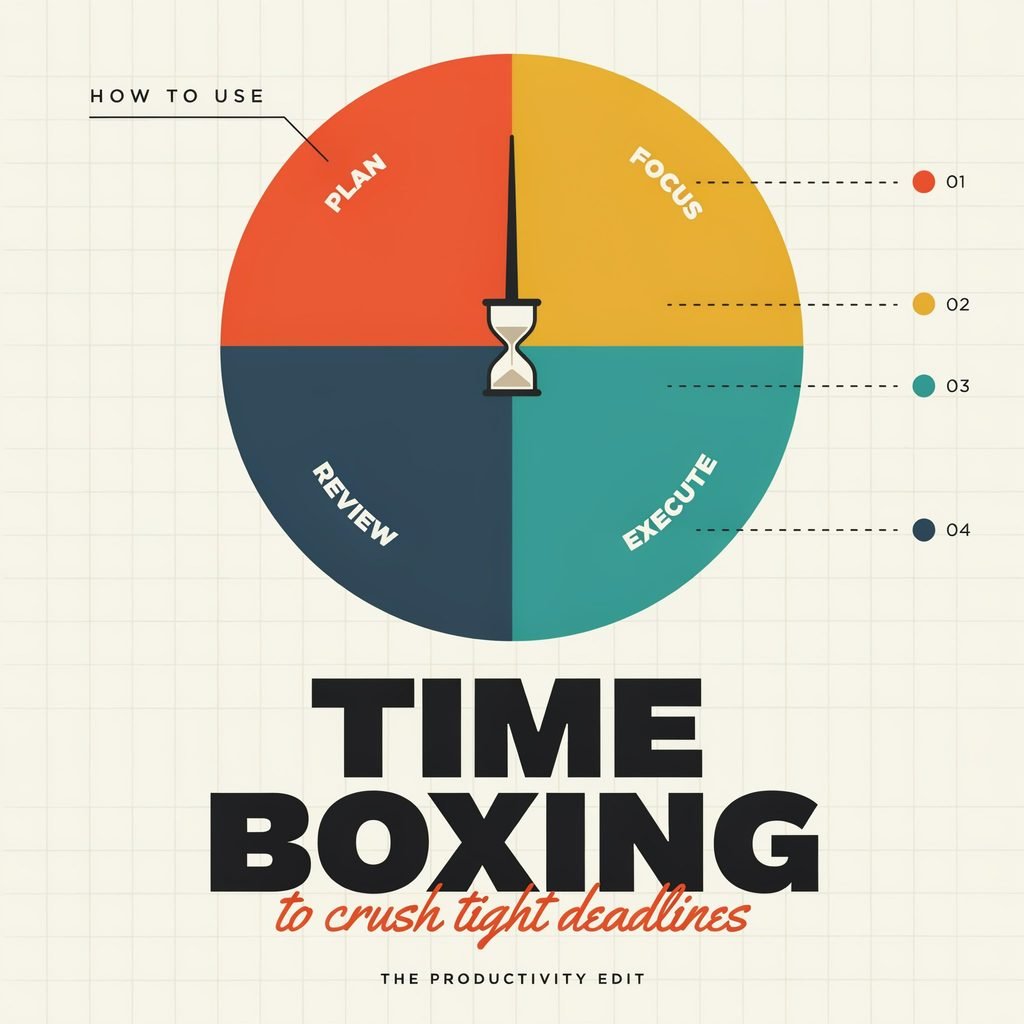
1. Time Blocking
Instead of a to-do list, block time on your calendar for specific types of work. “Write blog post from 9:00–11:00 a.m.” is infinitely more powerful than “write blog post” sitting on a list somewhere. Your calendar becomes a contract with yourself.
2. Task Batching
Group similar tasks together. Instead of answering emails throughout the day, process them in two focused 30-minute windows — one mid-morning and one in the late afternoon. Batching reduces the cognitive switching cost that drains your mental energy.
3. The “Top 3” Rule
Every morning, choose three — and only three — tasks that would make today a success if you completed them. These should align with your weekly or monthly goal setting. Everything else is secondary.
How to prioritize tasks within your Top 3: Use a simplified Eisenhower Matrix. Ask:
- Is it urgent AND important? Do it first.
- Is it important but not urgent? Schedule it.
- Is it urgent but not important? Delegate it if possible.
- Is it neither? Delete it.
Real-world example: Elena, a startup founder, used to start each day with a to-do list of 15 items. She’d check off maybe seven and feel defeated. She switched to the Top 3 method plus time blocking. Suddenly she was shipping features, closing deals, and leaving the office at 6 p.m. instead of 10 p.m.
Good daily planning isn’t about filling every slot on your calendar. It’s about protecting the slots that matter and letting the rest of the day flex around them. That’s how you build a better workflow that doesn’t burn you out.
Beat Procrastination Before It Starts
Let’s be honest: everyone procrastinates. The difference between productive people and everyone else isn’t that they never delay — it’s that they have systems to catch themselves before it spirals.
Avoid procrastination by understanding its root causes:
- The task feels too big or vague
- You’re afraid of doing it poorly
- There’s no clear deadline
- You’re emotionally avoiding something uncomfortable
Here are four practical strategies that work:
Break it down until it’s ridiculous. “Write quarterly report” is paralyzing. “Open a Google Doc and write the first three bullet points” is doable. Action creates momentum.
Use the 2-Minute Rule. If a task takes less than two minutes, do it immediately. Don’t add it to a list. This clears mental clutter and builds a sense of progress.
Set artificial deadlines. Work expands to fill the time you give it. If a task could take a week, give yourself two days. Parkinson’s Law is real — use it to your advantage.
Pair the unpleasant with the pleasant. Listen to your favorite podcast only while doing expense reports. Have your special coffee only while reviewing analytics. This reframes the task emotionally.
Real-world example: Jamal, a grad student in Boston, kept putting off his thesis chapter. Every day he’d tell himself he’d start “when he felt ready.” He finally broke the chapter into 200-word chunks, set a 25-minute timer (Pomodoro technique), and promised himself he could stop after one session. He ended up writing 1,500 words that afternoon and finished the chapter a week ahead of schedule.
The lesson? Procrastination isn’t a character flaw — it’s a design problem. Fix the design, fix the delay.
Eliminate Distractions and Protect Your Focus
Here’s a stat that should scare you: research from UC Irvine shows it takes an average of 23 minutes to fully regain focus after an interruption. If you’re getting pinged every 10 minutes, you’re never truly focused.
Modern work is a war for your attention, and you’re losing if you haven’t set up defenses. The good news: most distractions are completely under your control.
The Big Four to Tackle First
1. Notifications. Turn off everything except genuinely urgent channels. Put your phone in Do Not Disturb during focus blocks. Most “urgent” messages aren’t.
2. Social media. Use site blockers like Freedom or Cold Turkey during work hours. Out of sight, out of mind.
3. Clutter. A messy workspace creates a messy mind. Spend five minutes at the end of each day clearing your desk. You’ll thank yourself tomorrow.
4. Multitasking. It’s a myth. Your brain doesn’t multitask — it rapidly task-switches, losing accuracy and speed each time. Do one thing at a time.
Build a Focus-Friendly Environment
- Use noise-canceling headphones or lo-fi playlists to signal “focus mode” to coworkers (and your own brain)
- Close unnecessary browser tabs — each one is a micro-distraction
- Set office hours for communication — tell your team when you’re available vs. in deep work
- Work in 90-minute focus blocks followed by genuine breaks. Your brain can only sustain peak attention for so long.
Real-world example: Priya, a remote software engineer, used to keep Slack open on a second monitor all day. She’d check it every few minutes “just in case.” She moved Slack to a separate browser tab, turned off desktop notifications, and only checked it during her two designated batch windows. Her coding output went up 40%, and she stopped feeling mentally exhausted by 3 p.m.
When you eliminate distractions proactively, you don’t have to rely on willpower. You design an environment where focus is the default.
Build Productivity Habits That Last
Here’s the truth most productivity gurus won’t tell you: motivation is overrated. Systems beat willpower every single time.
The goal isn’t to feel motivated every day — it’s to build productivity habits so ingrained that you do the right thing even when you don’t feel like it. Self-discipline isn’t about being superhuman. It’s about having routines that make good decisions automatic.
The Habit Loop
Every habit follows the same pattern: Cue → Routine → Reward.
To build a new productivity habit, engineer all three:
- Cue: A specific time, place, or trigger (e.g., “every day at 8:30 a.m.”)
- Routine: The actual behavior (e.g., “review today’s Top 3 tasks”)
- Reward: Something satisfying (e.g., a cup of your favorite coffee while doing it)
Habits That Compound
- Prepare the night before. Lay out tomorrow’s clothes, pack your bag, and write down your Top 3 tasks before bed. This removes morning friction.
- End each day with a 5-minute review. What went well? What didn’t? What’s tomorrow’s focus?
- Use checklists. Pilots, surgeons, and top performers all use them. They reduce cognitive load and prevent missed steps.
- Track your wins. A simple habit tracker (a notebook or app) builds motivation through visible progress.
Consistency matters more than intensity. A 15-minute daily planning session beats a two-hour weekly planning binge every time. Small daily wins compound into massive results over months.
Real-world example: David, a sales director in Seattle, struggled to keep his CRM updated. He attached the habit to something he already did: every day after lunch (cue), he’d spend exactly 10 minutes updating his pipeline (routine), then reward himself with a walk around the block (reward). Within six weeks, it was automatic — and his forecast accuracy improved dramatically.
Use Tools and Systems to Work Smarter
You can’t out-hustle a broken system. The right tools — used intentionally — are force multipliers. Used poorly, they’re just more distractions wearing productivity costumes.
Here’s a clean, minimal toolkit that covers 90% of what most people need:
The Core Stack
- Calendar (Google Calendar, Outlook, Fantastical): Your most important productivity tool. If it’s not on your calendar, it doesn’t exist.
- Task manager (Todoist, Things 3, Microsoft To Do, TickTick): A single trusted inbox for everything you need to do. Review it once or twice a day — not constantly.
- Notes app (Notion, Obsidian, Apple Notes, OneNote): A second brain for ideas, project details, and reference material.
- Focus timer (Toggl, Forest, or just your phone’s built-in timer): For Pomodoro sessions and time tracking.
Automation: The Hidden Leverage
Look for tasks you repeat weekly and automate them. Zapier, Make, and built-in app automations can handle things like:
- Saving email attachments to a specific folder
- Creating recurring calendar events
- Posting social content from a spreadsheet
- Syncing data between your CRM and task manager
A 30-minute setup can save you hours every month.
Avoid Tool Overload
Here’s a warning: collecting productivity apps is itself a form of procrastination. Pick one tool per category, learn it well, and commit. The person who uses Todoist for three years will always outperform the person who switches tools every month.
Real-world example: Rachel, a content creator, used to manage her workflow across four different apps plus a notebook. She consolidated everything into Notion — calendar, tasks, content ideas, and client notes all in one place. Her efficiency jumped, and she stopped losing things in the cracks.
The best system is the one you actually use. Start simple, improve over time.
Balance Productivity with Rest
Here’s the paradox most high achievers learn the hard way: rest is not the opposite of productivity — it’s the fuel for it.
You can’t run a car on fumes forever, and you can’t run yourself on six hours of sleep and endless caffeine. Sustainable productivity requires intentional recovery.
Why Rest Matters
- Sleep consolidates learning and memory. Skimping on sleep literally makes you dumber the next day.
- Breaks restore focus. Your brain’s attentional resources deplete with use. Without breaks, your output quality collapses.
- Downtime sparks creativity. Your brain solves hard problems in the background when you’re not actively trying.
Practical Rest Strategies
- Take real breaks. Step away from screens. Walk outside. Stretch. Don’t just switch tabs.
- Protect your evenings. Have a hard stop time for work. Your brain needs time to decompress.
- Sleep 7–9 hours. Non-negotiable for long-term performance.
- Schedule fun and hobbies. They’re not luxuries — they’re investments in your mental health and creativity.
- Take real vacations. A day off is not a vacation. Disconnect fully, even if it’s just a long weekend.
Stress reduction isn’t a nice-to-have — it’s a performance strategy. Chronic stress impairs decision-making, kills creativity, and eventually leads to burnout. Building genuine work-life balance isn’t about working fewer hours — it’s about being fully present for whatever you’re doing, whether that’s work or rest.
Real-world example: Tom, a VP at a tech company, worked 70-hour weeks for years and thought he was killing it. After a health scare, he committed to leaving at 6 p.m., taking weekends fully off, and sleeping 8 hours a night. Within three months, his team’s output actually increased — because he was making sharper decisions and modeling healthier behavior.
Conclusion: Your Day, Your Design
Mastering your day isn’t about finding some secret hack that only 1% of people know. It’s about applying a small set of proven principles — consistently.
Let’s recap what actually moves the needle:
- Start with a morning routine that protects your focus
- Plan daily using time blocking, task batching, and the Top 3 rule
- Beat procrastination by breaking tasks down and setting deadlines
- Eliminate distractions by designing your environment
- Build habits that make the right choices automatic
- Use simple tools to support your system, not replace it
- Protect rest as a non-negotiable part of performance
Improve productivity one decision at a time. You don’t have to overhaul your entire life this week. Pick ONE thing from this guide — maybe a better morning routine, maybe the Top 3 method, maybe turning off notifications — and commit to it for the next 14 days.
Small changes, done consistently, compound into a completely different life.
Your day is waiting. What will you do with it?
Your Next Step (Do This Today)
Tonight, before bed, write down your Top 3 tasks for tomorrow. That’s it. Three tasks that, if completed, would make tomorrow a success. Put the list where you’ll see it first thing in the morning.
Tomorrow, do those three things before anything else.
That single habit, repeated for two weeks, will change how you feel about your work — and yourself. Start now.
What’s your biggest productivity challenge right now? Drop it in the comments — we read every one and often feature reader strategies in future posts.