It’s 5:47 p.m. You’ve been at your desk since eight this morning. You answered forty-three emails, sat through two meetings, reorganized a spreadsheet, and replied to a dozen Slack messages. Your to-do list still has six items unchecked. The project that actually matters—the one your boss asked about, the one tied to your quarterly goals—barely got fifteen minutes of attention.
Sound familiar?
Here’s the uncomfortable truth: productivity isn’t about doing more tasks. It’s about doing the right tasks. You can fill ten hours with activity and still move the needle on nothing that counts.
That’s where the 80/20 Rule comes in. Also known as the Pareto Principle, this idea suggests that a small number of your efforts produce the bulk of your results. Once you learn to spot those high-impact tasks, you can focus on what matters, eliminate low-value tasks, and achieve more with less.
In this guide, you’ll learn how to apply the 80/20 Rule to your to-do list, your career, your business, and your daily schedule—so you can work smarter not harder and finally stop confusing motion with progress.
What Is the 80/20 Rule?
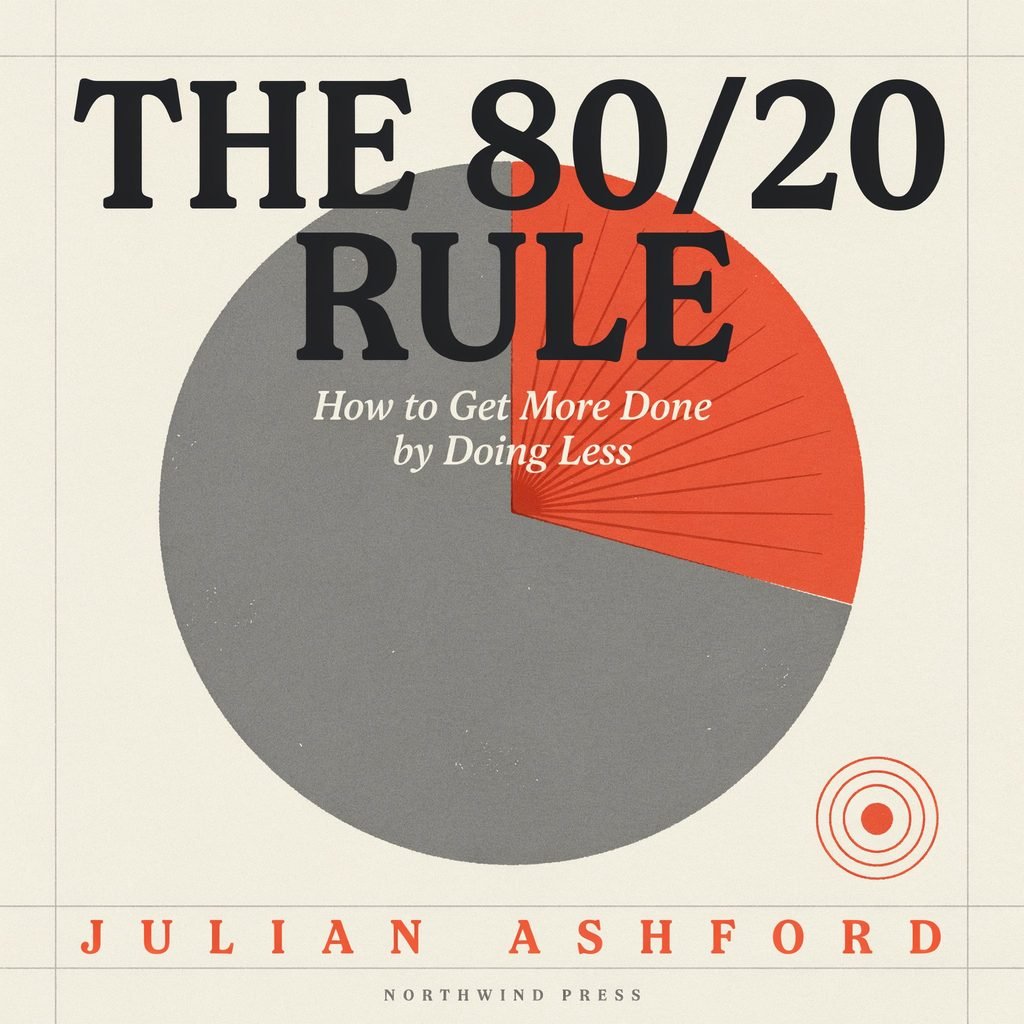
The Pareto Principle is named after Italian economist Vilfredo Pareto, who noticed in the early 1900s that roughly 80 percent of Italy’s land was owned by about 20 percent of the population. He later observed similar patterns in his garden—20 percent of his pea pods produced 80 percent of the peas.
The central idea is simple: roughly 80 percent of outcomes come from 20 percent of inputs.
In business, that might mean 20 percent of your clients generate 80 percent of revenue. In studying, 20 percent of the material might cover 80 percent of the exam. In your week, a handful of tasks likely drive most of your meaningful progress.
One important clarification: the numbers aren’t always literally 80 and 20. Sometimes it’s 70/30 or 90/10. The point isn’t the exact ratio. The point is that results are rarely distributed evenly. A few high-leverage activities carry disproportionate weight, and recognizing them is a powerful productivity strategy.
Why Doing Less Can Help You Accomplish More
Being busy versus productive is one of the most common traps professionals fall into. Busy means your calendar is full. Productive means your goals are moving forward. Those two things don’t always overlap.
When you try to do everything, you spread your energy thin. Decision fatigue sets in—every small choice about what to tackle next drains mental bandwidth. Multitasking fragments your focus. Low-value work piles up, creating the illusion of progress while your priorities stall.
Doing less doesn’t mean being lazy. It means choosing deliberately. When you prioritize tasks based on impact rather than urgency or convenience, you protect your best hours for deep work. You reduce stress. You avoid burnout. And ironically, you get more done because the work you do actually counts.
Think of it this way: an hour spent on a high-impact task might move a project forward by a week. An hour spent reformatting a slide deck might move it forward by zero. Both feel like work. Only one changes your results.
How to Apply the 80/20 Rule to Your To-Do List
Here’s a practical way to start today:
- Write down everything on your plate. Every task, errand, email thread, meeting, and project. Don’t filter. Just list.
- Ask one question about each item: “If I could only complete one thing today, which task would create the most meaningful progress toward my goals?”
- Rank tasks by impact. Consider urgency, long-term value, and alignment with your biggest goal.
- Circle your top two or three. These are your high-impact tasks. Schedule them first, during your peak energy hours.
- Handle the rest strategically. Delegate, batch, automate, postpone, or drop what you can.
Consider Sarah, a marketing coordinator with ten tasks on her list: respond to emails, update a spreadsheet, draft a client proposal, attend a status meeting, research competitors, design a social graphic, file expense reports, prep slides for Thursday, follow up with a vendor, and brainstorm campaign ideas.
When she applies the 80/20 Rule, she realizes the client proposal and the campaign brainstorm will drive the most revenue and visibility. Everything else is maintenance. She blocks two morning hours for the proposal, schedules the brainstorm for after lunch, and batches the emails and expense report into a single afternoon window. Her day shrinks from chaotic to focused.
The 80/20 Rule for Work and Career Growth
The Pareto Principle shows up everywhere in your career if you look for it:
- Projects: A few key assignments build your portfolio and earn recognition far more than routine upkeep work.
- Skills: One or two in-demand skills—say, data analysis or copywriting—often lead to promotions or higher income more than a dozen surface-level competencies.
- Relationships: A small circle of mentors, collaborators, and networking contacts tends to generate most career opportunities.
- Admin load: Meetings, reports, emails, and repetitive tasks often consume hours but contribute little to your core output.
If you’re an employee, ask yourself which two or three projects will matter most in your next performance review. Protect time for those. If you’re a freelancer, identify which services bring the best-paying, lowest-stress clients and lean in. If you’re a remote worker, guard your deep work blocks fiercely and set boundaries around notifications. If you own a business, look at delegation and automation as tools to free you for strategy rather than busywork.
The goal is to improve work performance by concentrating energy where it compounds, not by grinding longer hours.
Using the 80/20 Rule in Business
For entrepreneurs and business owners, the 80/20 Rule is a lens for business productivity.
Often, 20 percent of your customers generate 80 percent of revenue. A handful of products or services drive most profit. One or two marketing channels outperform the rest. A few content topics bring the majority of website traffic.
Take Marcus, who runs a small landscaping company in Ohio. He assumed all his services mattered equally. After reviewing a year of invoices, he discovered that commercial lawn maintenance contracts—just 15 percent of his client base—produced 70 percent of his profit. Residential one-off jobs, meanwhile, ate up scheduling time, fuel, and labor for thin margins. He didn’t drop residential work entirely, but he stopped advertising it aggressively and reinvested that marketing budget into landing more commercial contracts. Revenue climbed. His weekends freed up.
The same logic applies to customer retention, conversion optimization, and sales activities. Analyze your performance data. Find the segments, channels, and offers that punch above their weight. Double down there. Trim what drains resources without proportional return.
The 80/20 Rule for Time Management
If you want to manage your time better, start with a time audit. For one week, track how you spend each hour. Be honest. Note the meetings that could have been emails, the twenty-minute social media scrolls, the repetitive tasks that could be automated.
Once you see the data, patterns emerge. Maybe Tuesday mornings are lost to a standing meeting with no clear agenda. Maybe you lose ninety minutes daily to notifications. Maybe you batch-able tasks like invoicing or grocery shopping are scattered across five different days.
Here are practical productivity tips to reclaim that time:
- Time blocking: Assign specific hours to specific categories of work. Protect your deep work sessions like appointments you can’t cancel.
- Batching: Group similar tasks—emails, phone calls, errands—into single windows.
- Boundaries: Turn off non-essential notifications. Set “do not disturb” hours. Say no to meetings without a clear purpose.
- Energy mapping: Notice when your concentration peaks. For many people, that’s mid-morning. Schedule your hardest, highest-value work then. Leave admin for the post-lunch dip.
These daily productivity habits build an efficient workflow over weeks. You stop reacting to the loudest demand and start directing your attention intentionally.
How to Find Your Highest-Value Tasks
Use this step-by-step framework whenever you feel overwhelmed or unsure where to focus:
- Define one meaningful goal. Make it specific: “Land three new clients this quarter” or “Finish my thesis draft by March.”
- List every action connected to that goal. Brainstorm without judging.
- Identify the actions most likely to create measurable progress. Which two or three, if done well, would move you closest to the finish line?
- Eliminate, automate, delegate, postpone, or reduce the rest. Use tools, templates, or delegation to handle low-value tasks. Give yourself permission to let minor things slide temporarily.
- Review weekly. Every Friday or Sunday, spend fifteen minutes asking: Did my top tasks actually move the goal? What shifted? What should I drop next week?
This simple weekly review keeps your task prioritization sharp and prevents drift. It turns goal setting into a living practice rather than a January resolution you forget by February.
Common Mistakes When Using the 80/20 Rule
The Pareto Principle is a framework, not a law. Here are missteps to avoid:
- Treating the ratio as exact science. It’s a heuristic, not a formula. Don’t stress if your split looks like 70/30.
- Ignoring essential maintenance work. Paying bills, answering a boss’s quick question, or doing basic hygiene on a project matters. Not everything needs to be “high-impact” to be necessary.
- Eliminating tasks without understanding their role. That weekly check-in email might seem minor, but it keeps a key relationship warm.
- Focusing only on short-term results. Some high-value work—learning a skill, building trust, writing a book—pays off slowly.
- Using the rule as an excuse to dodge hard work. Sometimes the highest-impact task is the one you least want to do.
- Failing to measure outcomes. If you don’t track results, you can’t tell whether your “20 percent” is actually driving progress.
Practical 80/20 Examples for Everyday Life
The principle extends well beyond the office:
- Personal finance: A few large expenses—housing, transportation, food—drive most of your budget. Optimizing those three categories does more than clipping forty coupons.
- Fitness: A handful of compound exercises, consistent sleep, and a reasonable diet produce most health improvements. You don’t need a two-hour routine.
- Studying: A small set of core concepts often covers the majority of exam questions. Identify them early.
- Home organization: You probably use 20 percent of your kitchen tools, clothes, and apps regularly. Decluttering the unused 80 percent simplifies daily life.
- Digital clutter: A few apps and subscriptions likely consume most of your screen time. Audit them quarterly.
- Relationships: A small group of close friends or family members provides most of your emotional support. Invest there.
- Content creation: If you blog or post online, a few pieces often generate the majority of traffic. Study what made them work and create more like them.
In every case, the lesson is the same: identify the vital few, give them your best energy, and let the trivial many take a back seat.
Conclusion
The 80/20 Rule isn’t permission to be lazy. It’s an invitation to be intentional. It asks you to stop treating every task as equally important, stop filling your day with noise, and start directing your limited time and energy toward the work that truly moves your life forward.
You don’t need another hour in the day. You need fewer hours spent on things that don’t matter.
So here’s your challenge: pick one goal right now. Identify the two or three actions most likely to move it forward. Put them on tomorrow’s calendar before anything else. Protect that time. Let the busywork wait.
That’s how you get more done by doing less. That’s how you focus on what matters. And that’s how you build a productive, less stressful life—one deliberate choice at a time.
Frequently Asked Questions
Does the 80/20 Rule always mean exactly 80 percent and 20 percent?
No. The numbers are illustrative, not a strict formula. Sometimes the split is 70/30, 90/10, or even 95/5. The principle simply highlights that inputs and outputs are rarely distributed equally. Use it as a lens for spotting disproportionate impact, not as a mathematical rule.
How can I use the 80/20 Rule at work?
Start by listing your regular tasks and asking which ones produce the most visible results—revenue, completed projects, positive feedback, or progress toward your goals. Prioritize those tasks during your peak energy hours. Delegate, automate, or batch the rest. Review your priorities weekly to stay aligned.
What tasks should I eliminate first?
Look for tasks that consume time but produce little measurable outcome: unnecessary meetings, redundant reports, excessive email checking, or administrative work someone else (or software) could handle. Before cutting anything, confirm it isn’t quietly supporting something important.
Can the Pareto Principle help with time management?
Absolutely. A one-week time audit often reveals that a small number of activities—deep-focus work on key projects, strategic planning, or client conversations—drive most of your progress. By protecting those blocks and reducing distractions, you increase productivity without adding hours to your schedule.