Do you ever feel like you’re running on a hamster wheel? You start your morning with a massive to-do list, answer emails until your eyes blur, attend back-to-back Zoom calls, and yet, when 5:00 PM rolls around, you realize you haven’t actually accomplished anything meaningful. If this sounds familiar, you are not alone. In the modern US hustle culture, busy professionals, remote workers, and students are facing an epidemic of overload. We are constantly connected, yet constantly distracted, leading to a severe case of burnout.
Here is the core problem: we often confuse time management with energy management. You don’t need to magically add more hours to your day; you need to use your existing hours and mental focus more effectively. True productivity isn’t about doing more things; it’s about doing the right things with intention.
The good news? You don’t need a massive life overhaul to get your schedule back on track. By adopting a few simple time management habits, you can reclaim your day. Below are 15 frictionless, realistic micro-habits designed to cut through the noise, reduce cognitive load, and build instant momentum starting today. Let’s dive in.
Planning & Prioritization Habits: Setting the Stage for Success
When it comes to mastering your schedule, how you plan your day is just as important as how you execute it. Without a solid foundation, even the most disciplined workers fall victim to procrastination triggers and endless busywork. Here are five foundational habits to structure your day for maximum impact.
Habit 1: Use the Eisenhower Matrix for Daily Triaging
Not all tasks are created equal. The Eisenhower Matrix is a classic productivity framework that forces you to categorize your to-do list into four quadrants based on urgency and importance.
- Urgent & Important: Do it now (e.g., a client crisis).
- Important, Not Urgent: Schedule it (e.g., strategic planning).
- Urgent, Not Important: Delegate it (e.g., most emails).
- Neither: Delete it (e.g., doomscrolling).
By triaging your tasks every morning, you ensure that your daily priorities actually move the needle rather than just putting out fires.
Habit 2: The “Rule of 3” for Daily Tasks
A massive to-do list is a recipe for decision fatigue. Instead of writing down 20 things you hope to finish, adopt the “Rule of 3.” Each morning, identify the three high-impact wins that, if completed, would make the day a massive success.
Focusing on just three core objectives prevents you from feeling overwhelmed. It narrows your focus, lowers your cognitive load, and gives you a clear finish line. Once you crush those three tasks, anything else you accomplish is just a bonus.
Habit 3: Master Time Blocking for Deep Work
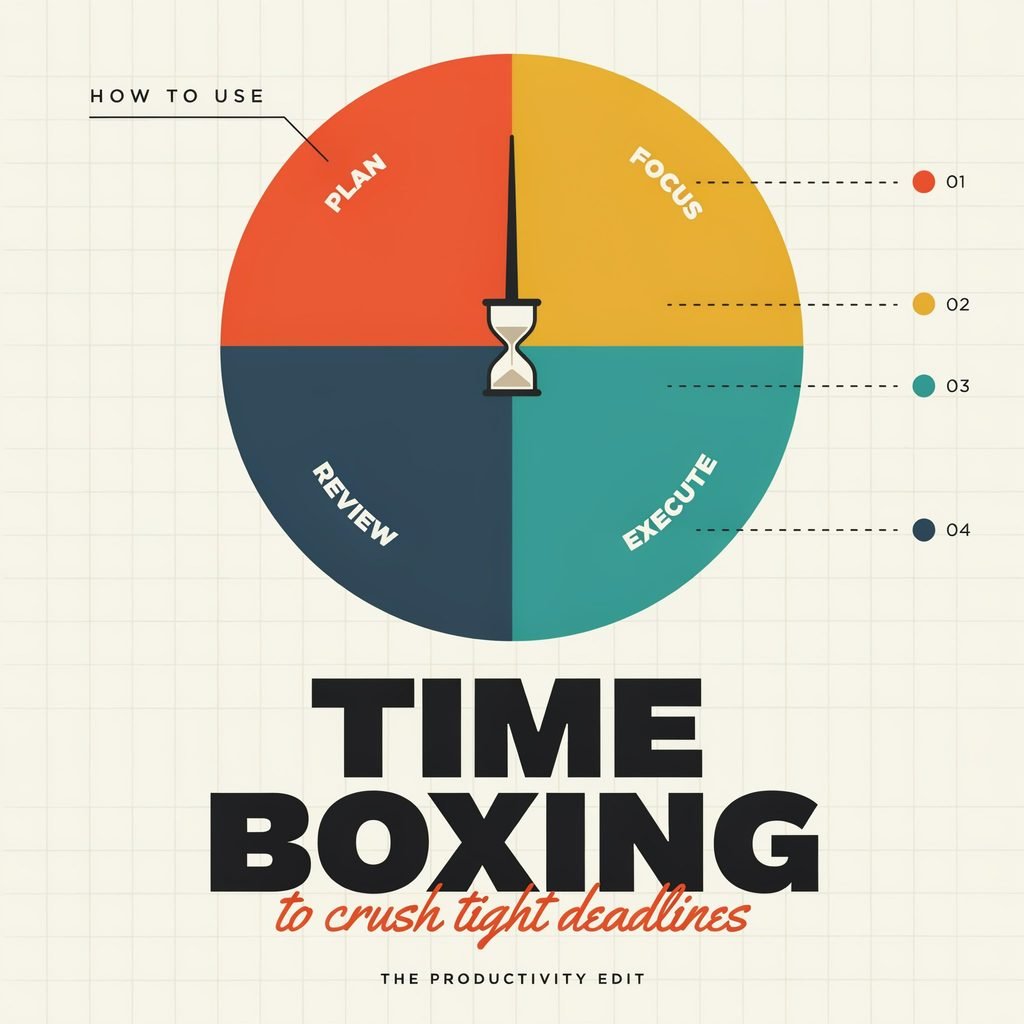
Open to-do lists are where productivity goes to die. Instead of simply listing tasks, assign them specific windows on your calendar. This is called time blocking.
When you schedule 90 minutes of uninterrupted deep work to write a report, you are making a commitment to yourself. Time blocking forces you to be realistic about how long things actually take and protects your most valuable asset: your focus. Instead of letting your inbox dictate your schedule, you become the architect of your own day. Treat these calendar blocks as sacred appointments that cannot be moved or canceled.
Habit 4: The 2-Minute Rule for Micro-Tasks
We all have those tiny, annoying tasks—replying to a quick email, paying a bill, or filing a document. If a task takes less than two minutes to complete, do it immediately.
This is the famous 2-minute rule. By clearing these micro-tasks instantly, you prevent them from piling up and cluttering your mental workspace. It’s a fantastic way to build early momentum in your morning routine without draining your willpower reserves.
Habit 5: Audit Your Time with a 3-Day Track
You can’t manage what you don’t measure. If you feel like you have no time, you likely have hidden “time sinks” eating away at your day. Conduct a simple time auditing exercise for just three days.
Use a tool like Toggl or a simple spreadsheet to track exactly what you do in 30-minute increments. You might be shocked to discover you spend two hours a day on Slack or social media. Once you identify these leaks, you can plug them by setting strict app limits, eliminating digital clutter, and reclaiming lost hours.
💡 Pro Tip: Don’t just plan your workday; plan your transitions. Scheduling a 10-minute buffer between time blocks allows your brain to reset, preventing the mental fatigue that often leads to afternoon slumps.
Focus & Execution Habits: Doing the Work That Matters
Planning is only half the battle. Once you know what needs to be done, you have to actually sit down and do it. In our hyper-connected world, maintaining focus is the ultimate superpower. Here is how to execute your tasks with laser-like precision.
Habit 6: Eliminate Context Switching Through Task Batching
Every time you switch from writing a report to checking an email, your brain experiences context switching. This mental gear-shifting drains your energy and ruins your flow state.
The antidote is task batching. Group similar, low-energy tasks together and tackle them in one dedicated block. Process all your emails at 11:00 AM and 4:00 PM. Make all your phone calls back-to-back. By batching, you preserve your mental energy for the heavy lifting.
Habit 7: Harness the Pomodoro Technique
If you struggle to start a daunting task, the Pomodoro technique is your best friend. Set a timer for 25 minutes of highly focused work, followed by a mandatory 5-minute break.
This simple rhythm creates a sense of urgency that defeats procrastination. Knowing you only have to focus for 25 minutes makes starting much easier. After four “Pomodoros,” take a longer 15-to-30-minute break to recharge. It is a highly effective way to manage your energy throughout the day.
Habit 8: Design a Distraction-Free Environment
Willpower is a finite resource; don’t waste it fighting your environment. To protect your focus, you must proactively design a workspace that minimizes procrastination triggers.
Put your phone in another room or on “Do Not Disturb” mode. Use browser extensions like Freedom or Cold Turkey to block distracting websites during your deep work blocks. Turn off non-essential desktop notifications. Consider the physical layout of your desk as well; a cluttered physical space often leads to a cluttered mind. When your environment is optimized for focus, doing the right thing becomes the path of least resistance.
Habit 9: Practice Single-Tasking Over Multitasking
Society has glorified multitasking, but neuroscience tells a different story. The human brain cannot actually focus on two complex tasks at once; it just rapidly toggles between them, lowering output quality and spiking stress hormones.
Commit to single-tasking. Close all browser tabs except the one you are actively using. Put on noise-canceling headphones and dedicate your full attention to the single task in front of you. You will finish faster, make fewer mistakes, and feel significantly less stressed.
Habit 10: Leverage the Pareto Principle (80/20 Rule)
The Pareto principle, or the 80/20 rule, states that 80% of your results come from just 20% of your efforts. As a professional or freelancer, not all clients, projects, or tasks yield the same return on investment.
Regularly review your workload to identify your “vital few” tasks. Ask yourself: “If I could only work two hours today, what specific tasks would I absolutely have to complete?” The answer reveals your true 20%. Shift your energy toward these high-leverage activities that actually drive revenue, growth, and meaningful outcomes.
🧠 Why It Works: Single-tasking isn’t just about doing one thing; it’s about giving that one thing your entire cognitive capacity. This leads to higher quality work and a deeper sense of professional satisfaction.
Energy & Mindset Habits: Sustaining Long-Term Productivity
You can have the best planning and focus strategies in the world, but if your energy is depleted, you will eventually hit a wall. Sustainable productivity requires treating your mind and body like the high-performance engines they are. Here is how to manage your energy and mindset for the long haul.
Habit 11: Implement “Shutdown Routines” at the End of the Workday
For remote workers, the line between the office and the living room is virtually non-existent. Without a clear stopping point, work anxiety bleeds into your personal time, destroying your work-life balance.
Create a strict “shutdown routine” to signal to your brain that the workday is over. Close your laptop, tidy your desk, review tomorrow’s schedule, and say out loud, “Schedule shutdown complete.” This psychological boundary setting is crucial for true mental recovery.
Habit 12: Align Tasks with Your Natural Circadian Rhythm
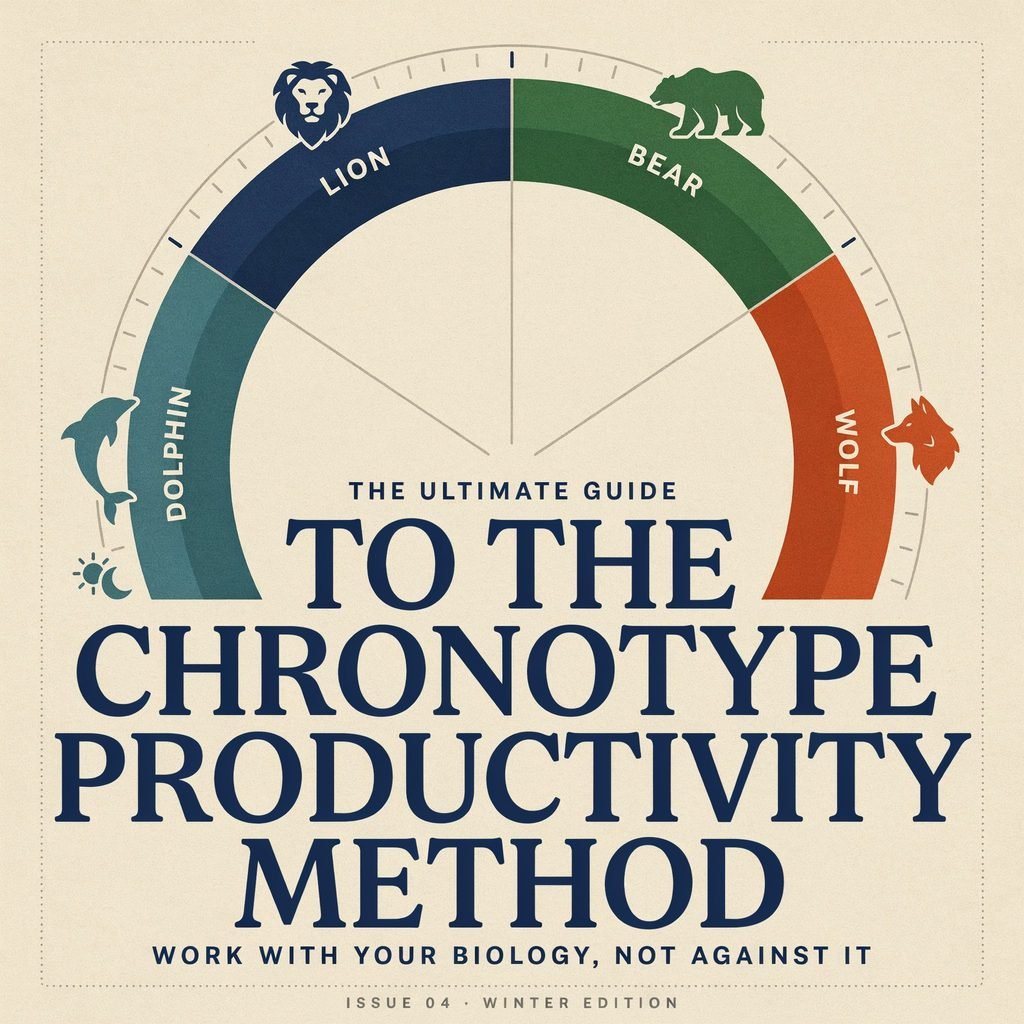
Are you a morning lark or a night owl? Everyone has natural peaks and troughs in their daily energy levels. Stop fighting your biology and start aligning your tasks with your energy management rhythms.
Schedule your most demanding, analytical, or creative deep work during your peak energy hours. If you find yourself staring blankly at a spreadsheet at 3:00 PM, don’t force it. Switch to a collaborative task or an administrative chore that requires less intense mental processing. Working with your biology, rather than against it, yields massive dividends.
Habit 13: Learn the Art of the “Clean No”
Every time you say “yes” to a minor request, you are implicitly saying “no” to your own daily priorities. Overcommitting is a fast track to burnout.
Master the art of the “clean no.” You don’t need to provide a lengthy excuse or apologize profusely. A polite, professional, and firm “I don’t have the bandwidth for this right now, but thank you for thinking of me” is highly effective. Boundary setting is not selfish; it is a prerequisite for high-quality work.
Habit 14: Prep Tomorrow Night Today (The Evening Reset)
Waking up and immediately having to decide what to do first is a massive drain on your morning willpower. Instead, do your future self a favor and prep tomorrow night today.
Spend 10 minutes before bed clearing your physical and digital workspace. Write down your “Rule of 3” for the next day and lay out your clothes or gym gear. This simple evening reset drastically reduces decision fatigue in the morning, allowing you to hit the ground running.
Habit 15: Schedule Intentional Active Recovery Breaks
Taking a break doesn’t mean scrolling through Instagram on the couch. True rest requires active recovery—activities that genuinely replenish your mental and physical reserves.
Schedule intentional breaks into your calendar. Go for a 15-minute walk outside without your phone, do some light stretching, or practice deep breathing. Stepping away from your screens and moving your body lowers cortisol levels, combats burnout, and actually boosts your long-term output when you return to your desk. Remember, resting is not a reward for working hard; it is a necessary prerequisite for working hard in the first place.
🛑 Key Takeaway: Saying “no” to a mediocre opportunity is the only way to leave space for a great one. Protect your calendar as fiercely as you protect your bank account.
Your Practical Implementation Plan: Start Small, Win Big
Reading through 15 new strategies can feel incredibly inspiring, but trying to adopt all of them by Monday morning is a guaranteed recipe for “habit fatigue.” When you try to change everything at once, you usually end up changing nothing at all.
Instead, use the psychological framework of Habit Stacking. Pick just one or two simple time management habits from this list that resonate most with your current struggles. Attach them to an existing part of your daily routine. For example, if you want to start the “Rule of 3,” stack it onto your morning coffee ritual: “While I drink my morning coffee, I will write down my top three tasks for the day.”
Give yourself two full weeks to master those first two habits before adding a third. Track your progress, celebrate your small wins, and be patient with yourself. Productivity is not about perfection; it is about consistent, incremental improvement. Over a few months, these tiny micro-shifts will compound into a radically more efficient, balanced, and fulfilling work life.
Conclusion: Take Back Your Time Today
Ultimately, time management is not a mystical talent you are born with; it is a practical skill built on a foundation of daily micro-choices. By shifting your focus from simply “getting things done” to intentionally managing your energy, priorities, and environment, you can break free from the hamster wheel of constant busyness.
You now have a toolkit of 15 powerful, frictionless habits to transform your workflow. But knowledge without action is just entertainment. So, here is your challenge: pick just one habit from this list and implement it in the next 10 minutes. Close your extra browser tabs, write down your Rule of 3, or set your first Pomodoro timer. Your future, less-stressed self will thank you.